
A philosophic attitude behind the Wharram designs is that ‘urban man’ can, with a little financial saving and some handcraft work, create an object of beauty. This object of beauty can then, for a period of hours, days, weeks or months, carry him/her out of the urban world into a natural never-never land; the seas and oceans; to a time when the world was young; when Mankind was directly and intimately interacting with the beauty and power of nature. There are hundreds/thousands of Wharram builders or, as I prefer to call them, “Sea People”, who have done or are now doing that!” James Wharram
A well built Wharram design is a Functional Kinetic Sculpture” Hanneke Boon

Everything you need to build your own sea-going catamaran: 3 steps
- Familiarise yourself with our range of designs and their unique qualities. For more detailed information read the Wharram Design Book which reviews each self-build boat model and offers a detailed introduction and understanding of the world of self-build catamarans.
- Order one or more sets of our Study Plans and immerse yourself into the boat builder’s mindset; evaluate the costs; the amount of time required to build your boat; where you will build it and where you will eventually launch it.
- Once you have decided on the boat that is right for you to build, order the Boat Building Plans and become a member of the global family of Wharram builders and sailors. You can build a Wharram with very little experience. All Wharram building plans are drawn for the first time builder, so anyone with a modicum of practical ability can build one of our designs. Our Building Plans present quality instruction, guidance and advice for both novice and professional alike. They are all based on decades of actual building experience and thousands of ocean miles sailed, so you can be confident in your boat’s capabilities and safety.
Tiki Designs



Coastal Trekkers To Long Term Live Aboards
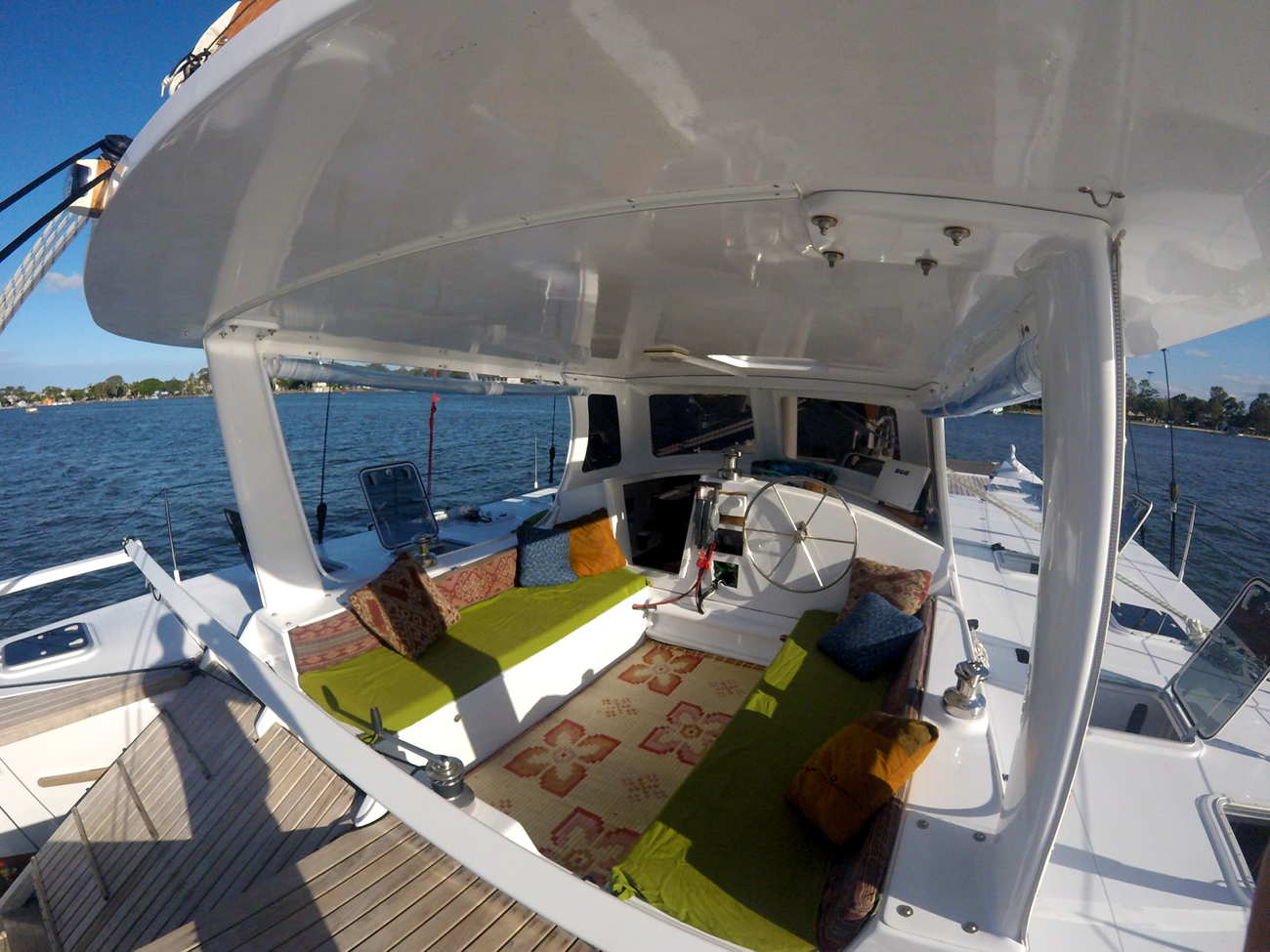
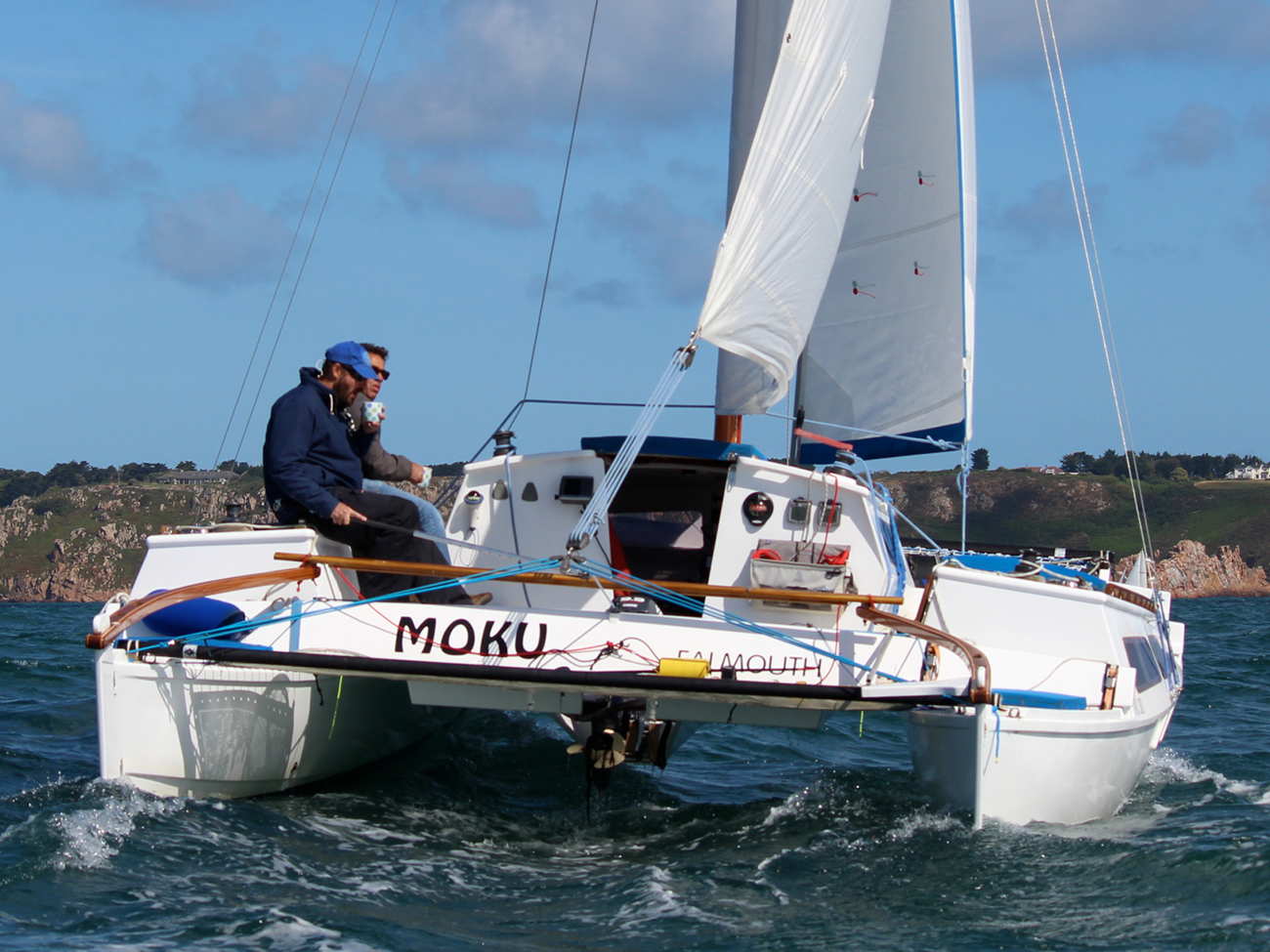
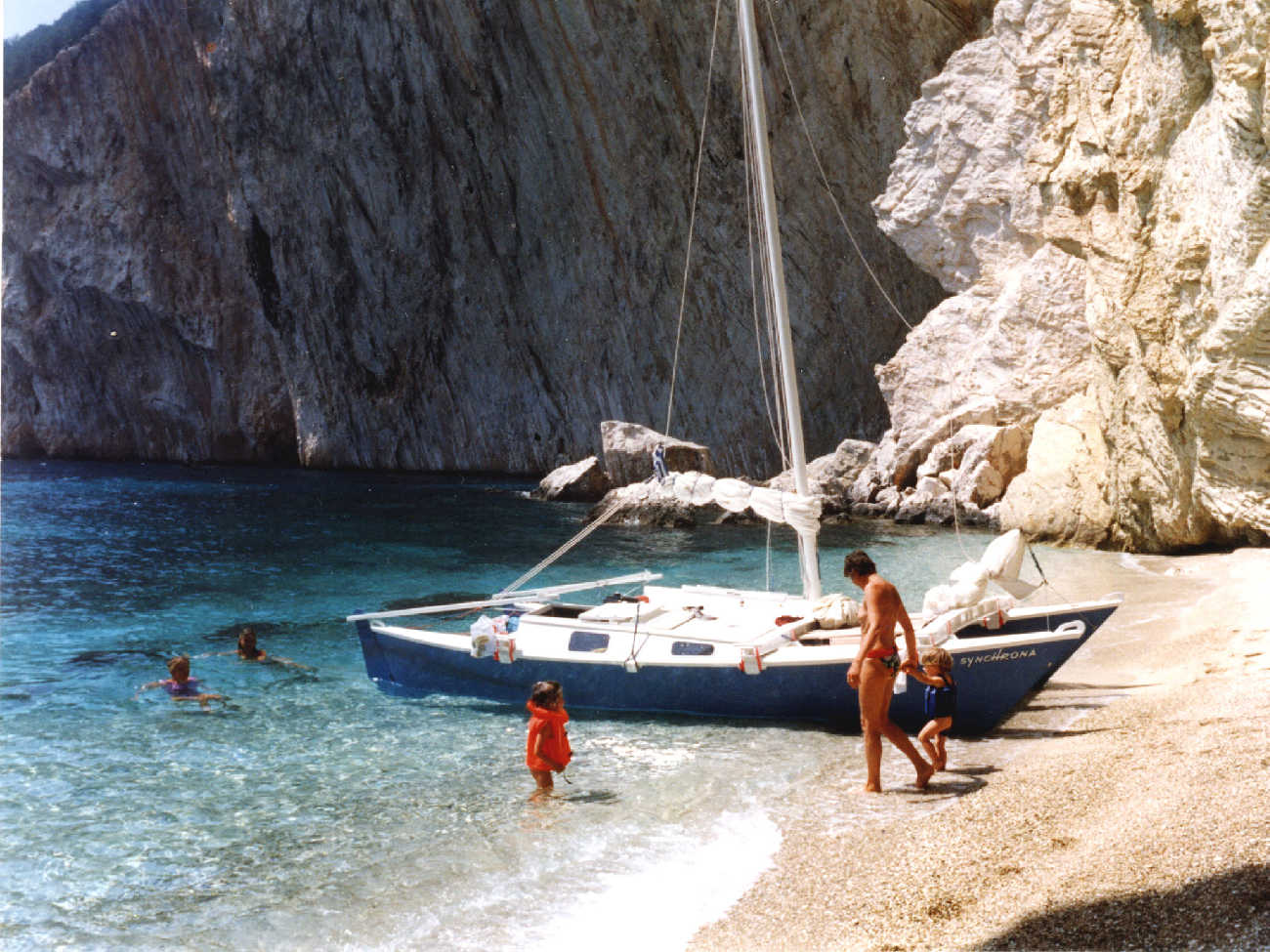
From the car trailable Tiki 21 – winner of the 1982 Cruising World Design Competition, to the Tiki 46, a spacious ocean cruiser or charter boat, the TIKI range offers car trailable coastal trekkers to long term live aboards. Although a Tiki 21, a very popular coastal trek design, has circumnavigated, we would not recommend this for everyone! A number of Tiki 26s have also made ocean crossings, but again this is only for the experienced sailor. The larger TIKI designs of 30ft and over are craft capable of longer voyages and ocean crossings. They are designed to be less costly to build by using appropriate wood/epoxy technology and by eliminating, wherever possible, expensive metal fittings common to modern yacht design.
On the larger TIKIs the ‘Deckpod’ offers sheltered steering and the ‘Stern Ramp’ provides easy access to and from the water. The TIKIs are boats you can work and live on. The Wharram approach goes beyond simple boat design – the concept of ‘Flexispace’ puts emphasis on not just the physical living area, but also the ‘mind space’ of those on board.
Hitia Designs
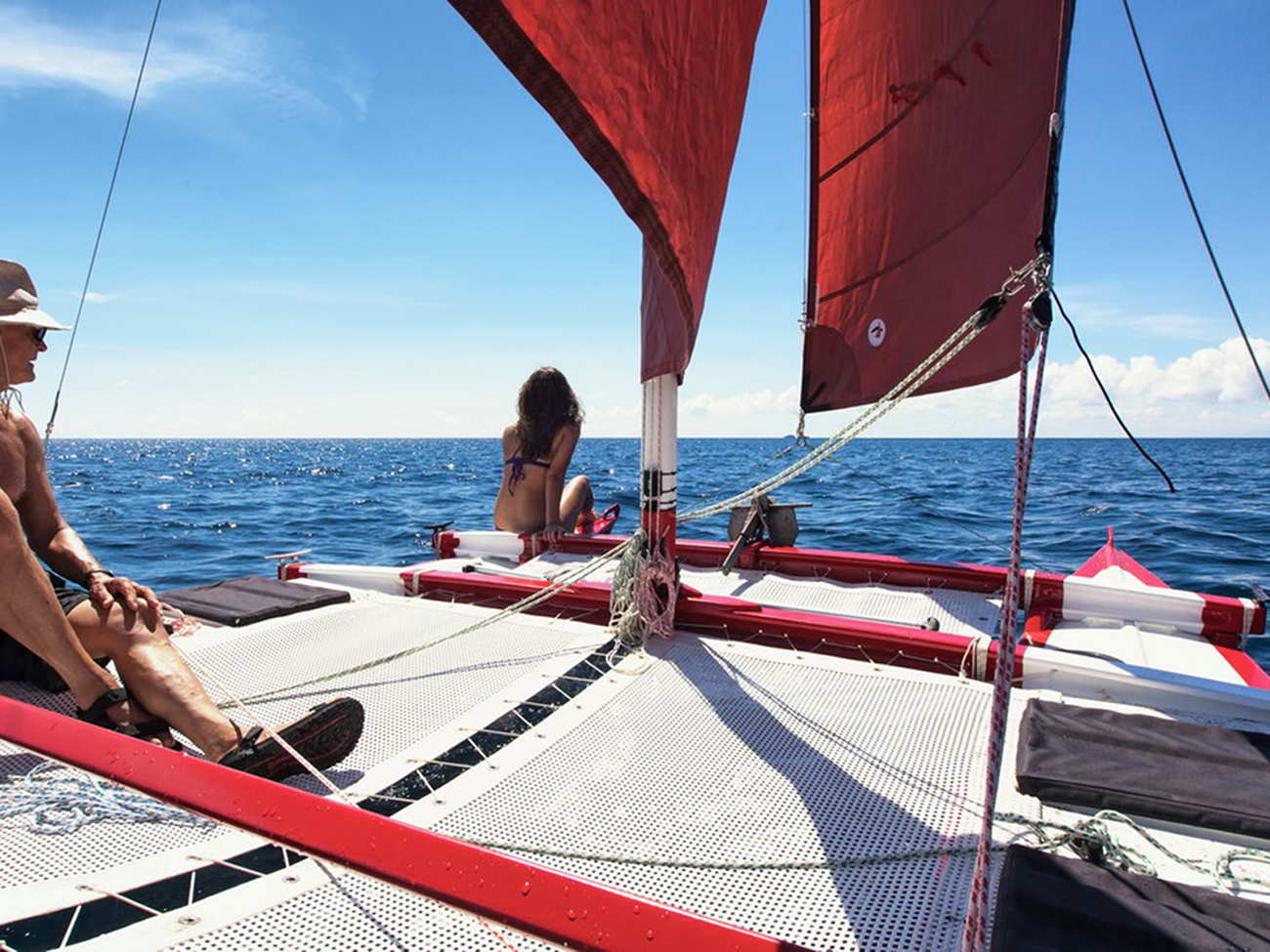

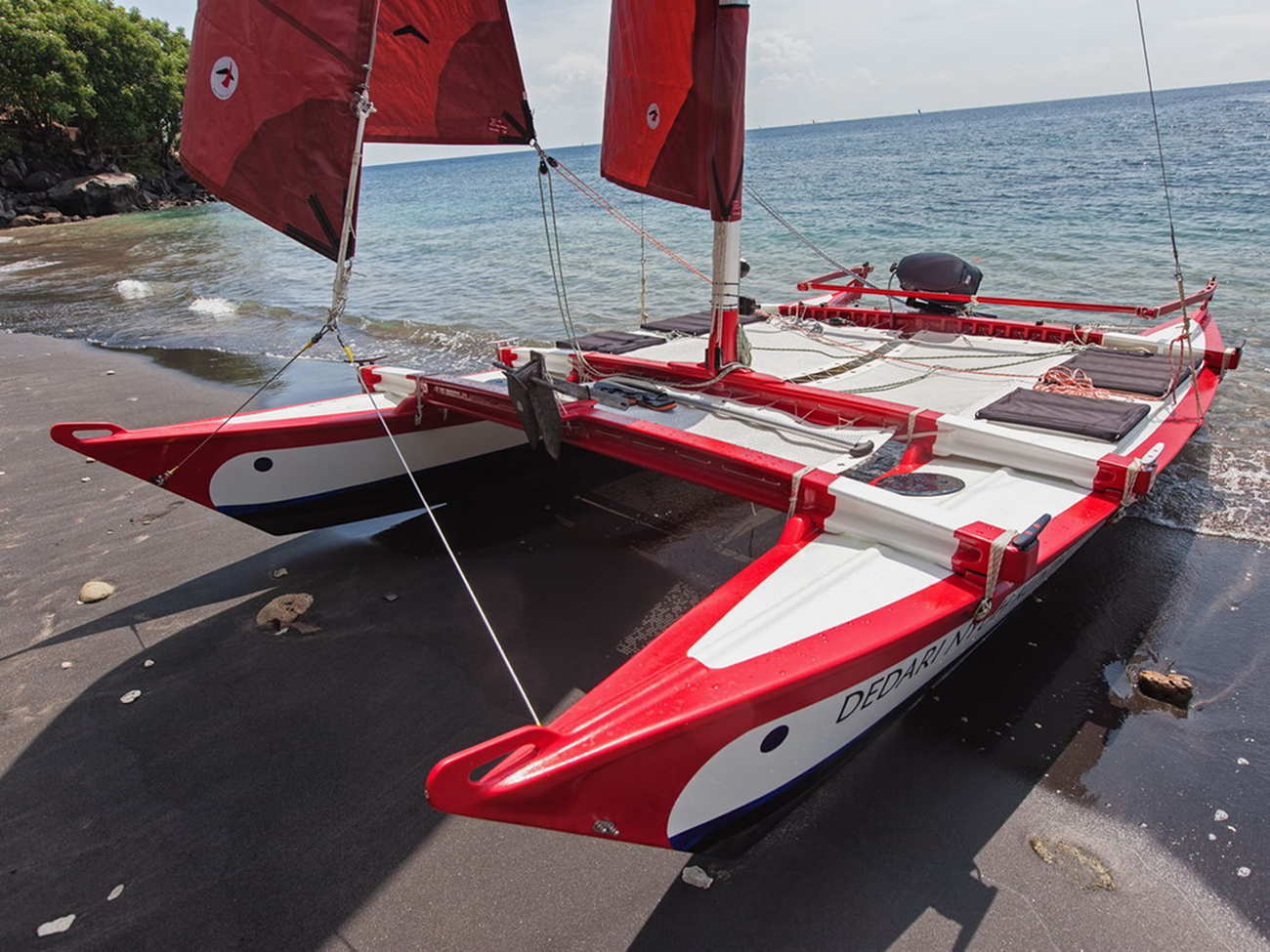
Affordable Weekend Adventure Boats
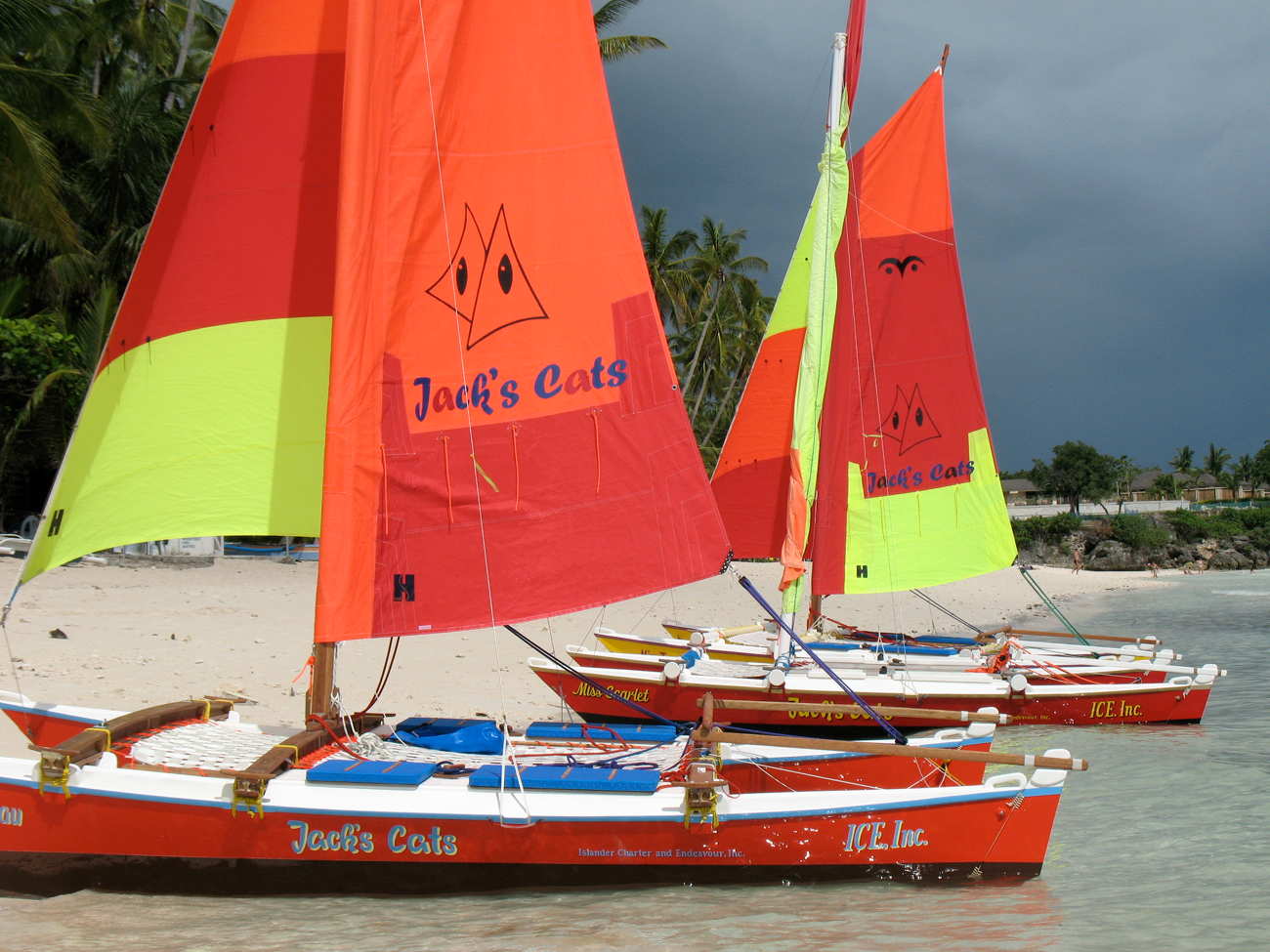
The Hitia Designs are the perfect beach catamarans. They are ‘coastal trekkers’ and cater for those who do not want a craft for long distance or “blue water” sailing, but would like to be able to trail their boat to varied interesting coasts and lakes. Their easy economical construction, stability and speed makes for affordable weekend adventure boats. The Hitia 14 can be carried on the roof of your car and fits on the deck of a larger boat. The Hitia 17 has more stowage space and room for a tent on deck for longer excursions. These boats are ideal for small adventures and coastal treks.
Introducing: The Mana 24 ‘Cat Kit’
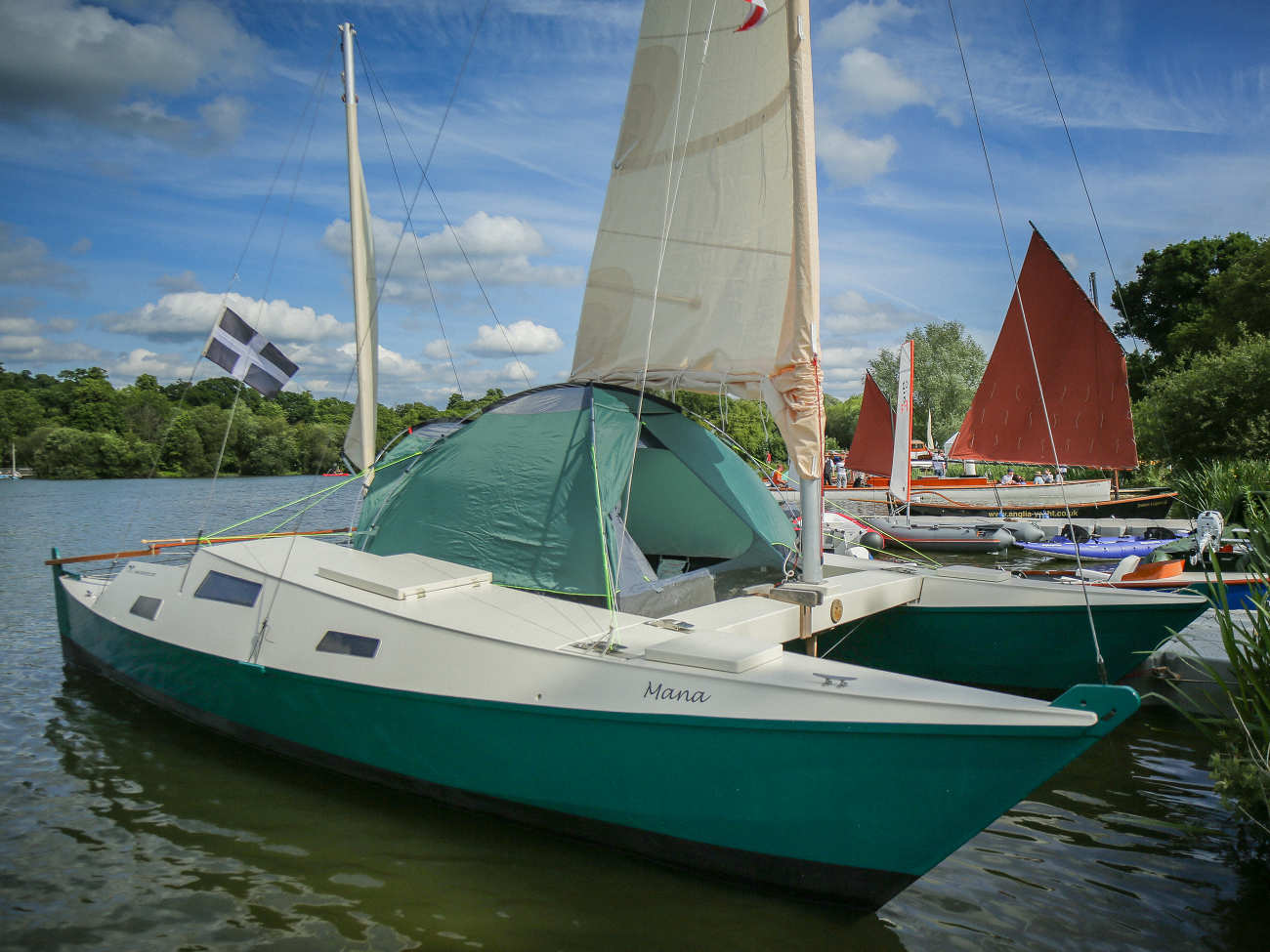


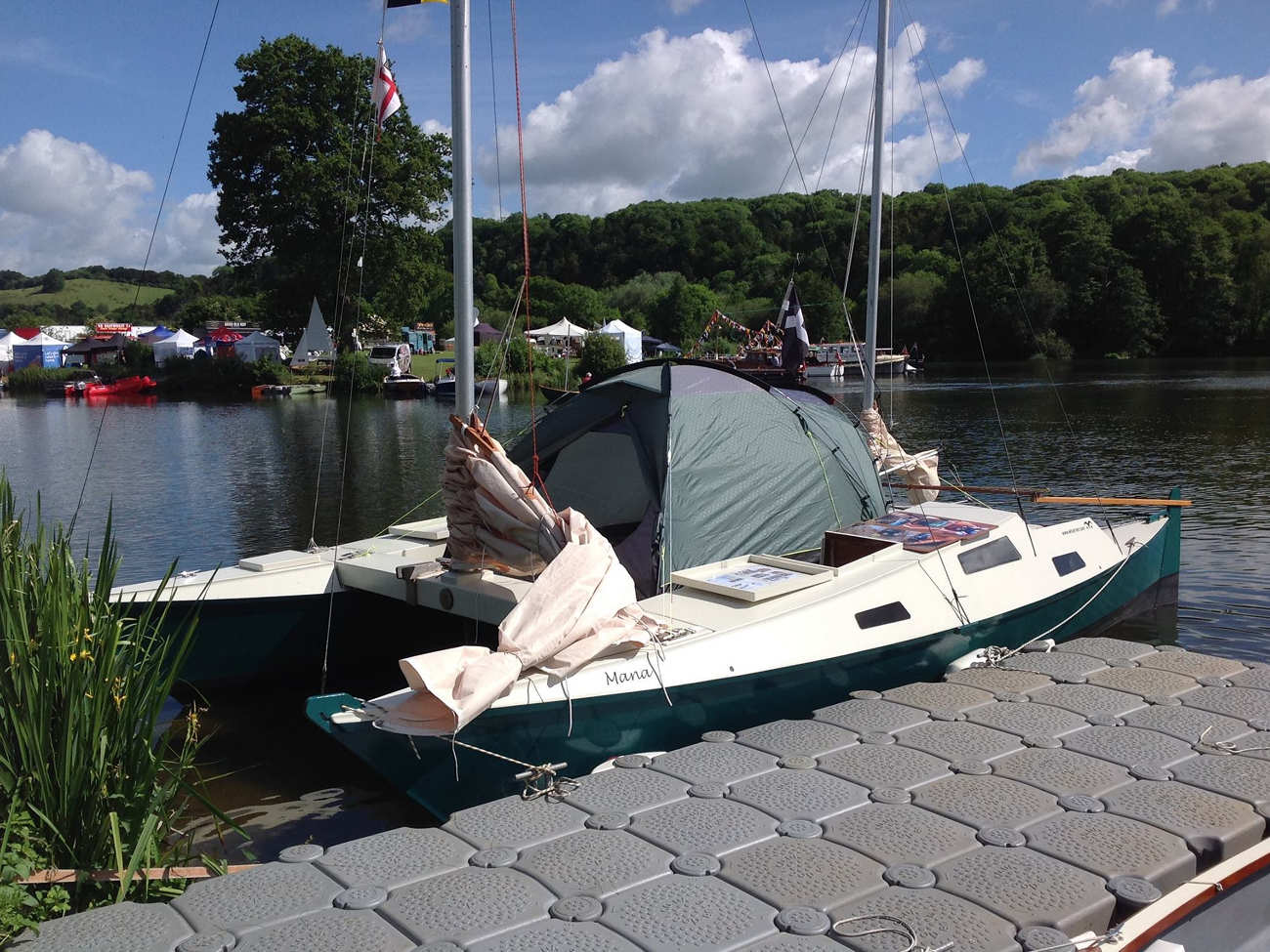
Boat In A Box
The MANA kit is sold with all the plywood cut out by CNC cutter and pre-coated with epoxy, so building the boat at home will be a bit like assembling a flat-pack. All the parts slot together perfectly so a hull can take shape in a day. Building from such a kit takes away the worry of measuring and cutting all the boat parts, which can be quite daunting to many first time builders and saves a lot of time in the early stages of building. In designing the MANA, we looked sideways into the world of camping and have combined the innovative CNC cut “flat pack” boat-building concept with the philosophy of outdoor living to create the unique MANA camper-sailer, specifically designed for trailer sailing.
The ply parts will have a first smooth coat of epoxy already applied, cutting down time in coating and sanding, so within a short time you will be able to assemble the hulls and see the boat you are building. As she is built from a pre-cut kit, we have been able to give the Mana more complex and beautiful shaping, giving her more interior volume than the Tiki designs.
Pahi Designs


The More Evocatively ‘Female’ Of The Wharram Designs
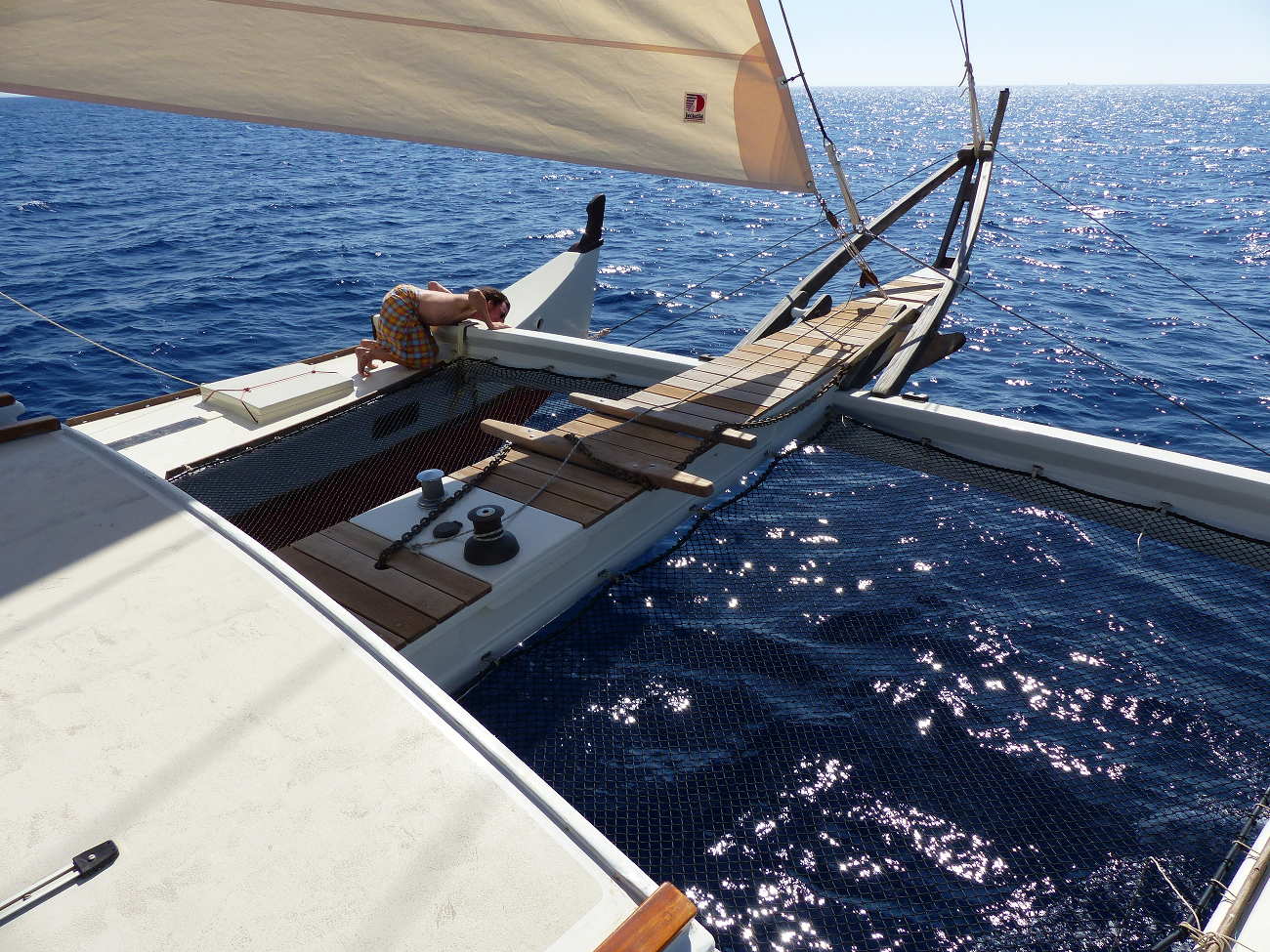
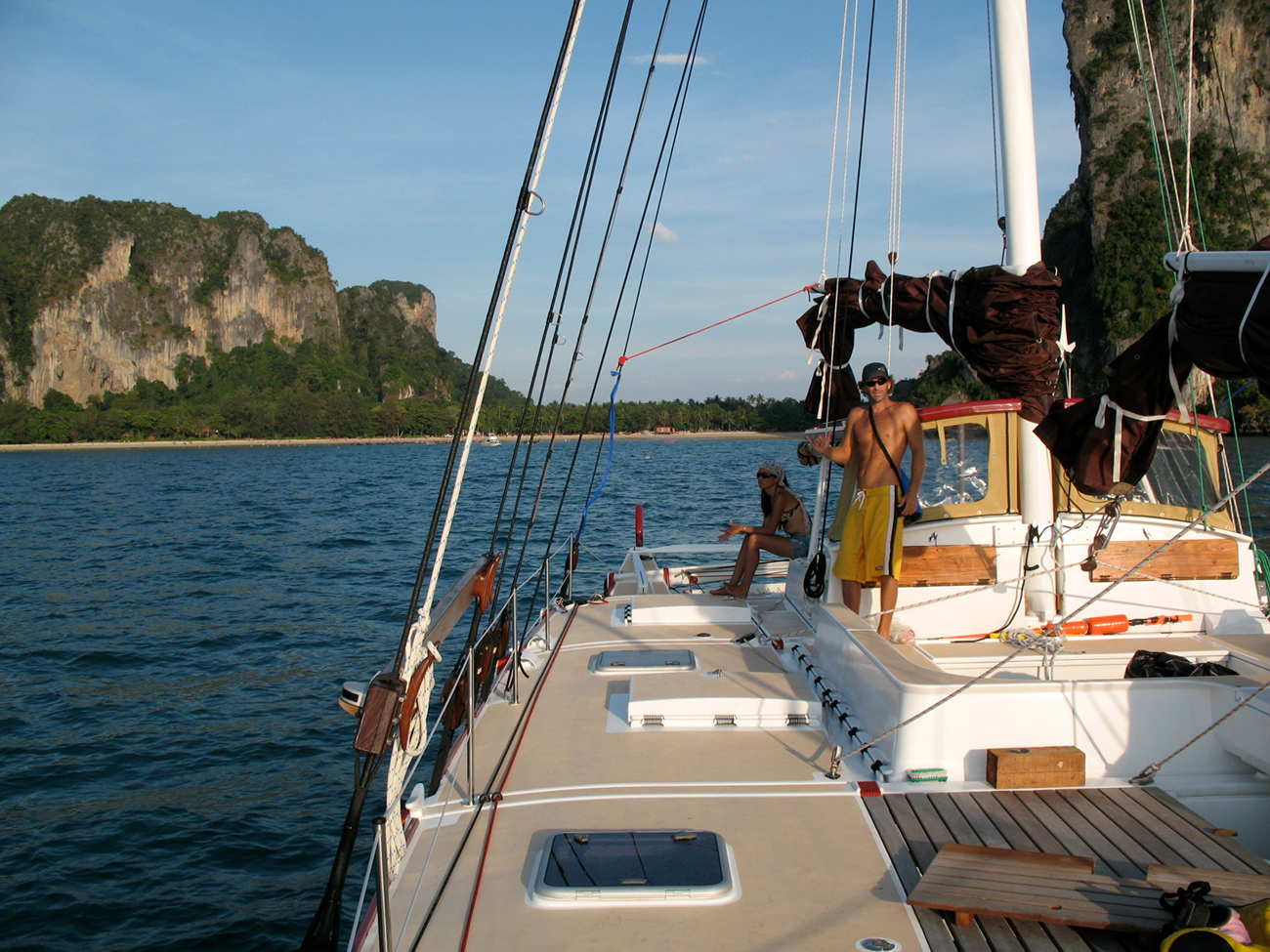
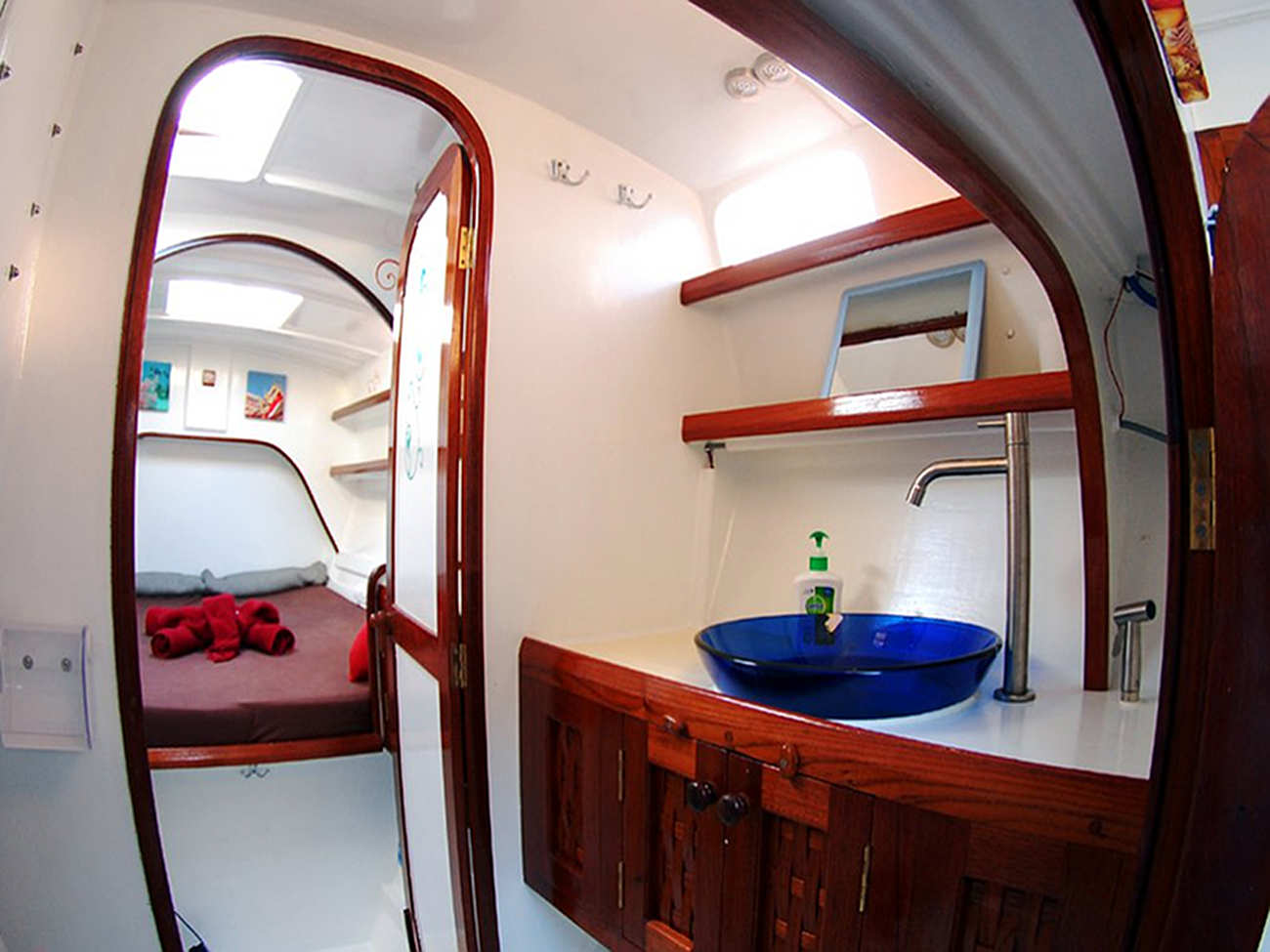
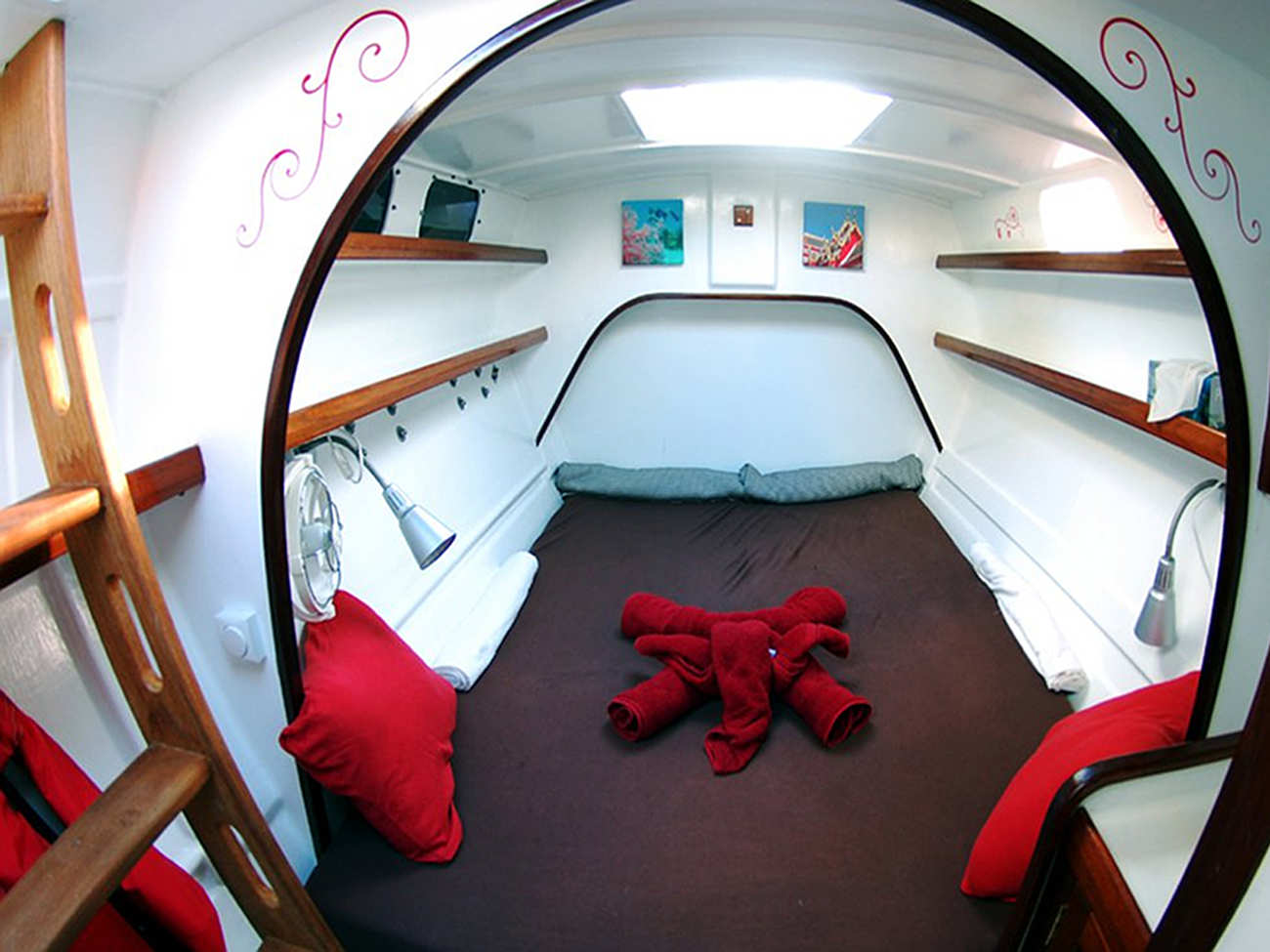
From the Coastal Trekking Pahi 26 to the impressive 63′ flagship of the Wharram fleet ‘Spirit of Gaia’ – the PAHI shape is more evocatively ‘Female’ than the Classic Wharram designs. They are a different visual/sculptural approach to the basic design elements inherent in the Classic Designs. Constructively, they are simpler to build, using epoxy fillets instead of more difficult wood joints. They are designed to use quick growing softwood plys, coated and glassed with epoxy to achieve a durable finish. The PAHI designs were the first to use rope lashings to attach the crossbeams, giving a shock absorbing effect, without the need for metal fittings. ‘Pahi’ in Polynesian dialects means ‘ship’.
The Pahi 42 ‘Captain Cook’ design set fresh ocean cruising standards when she was designed in 1979. The Pahi 63 was designed in 1986 and launched in 1992 to become the new ocean going flagship for the Wharram family. During the construction of ‘Spirit of Gaia’ many unique new solutions to plywood and epoxy building methods were developed, which were later incorporated in the larger TIKI and ISLANDER designs.
Ethnic Designs
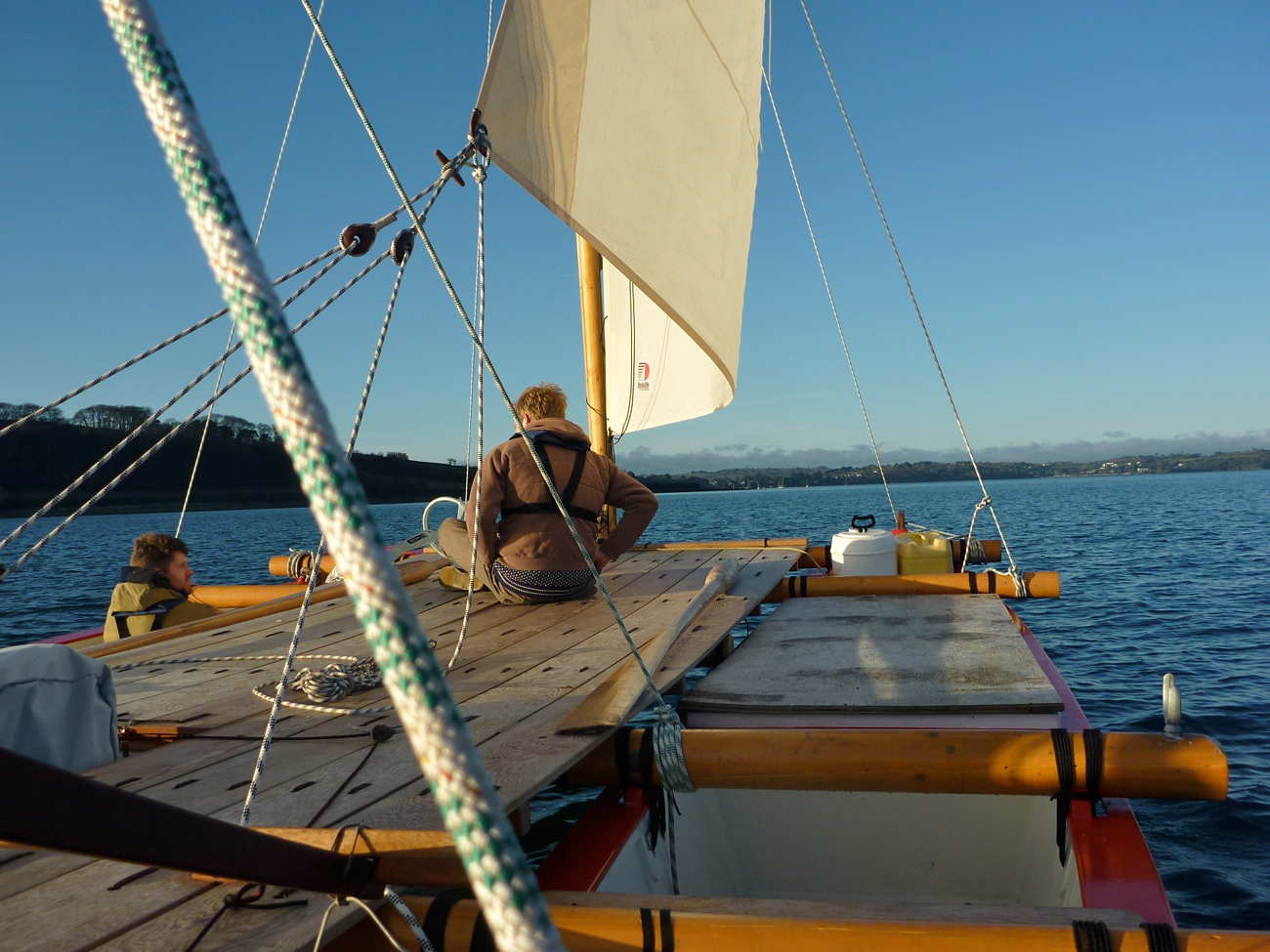
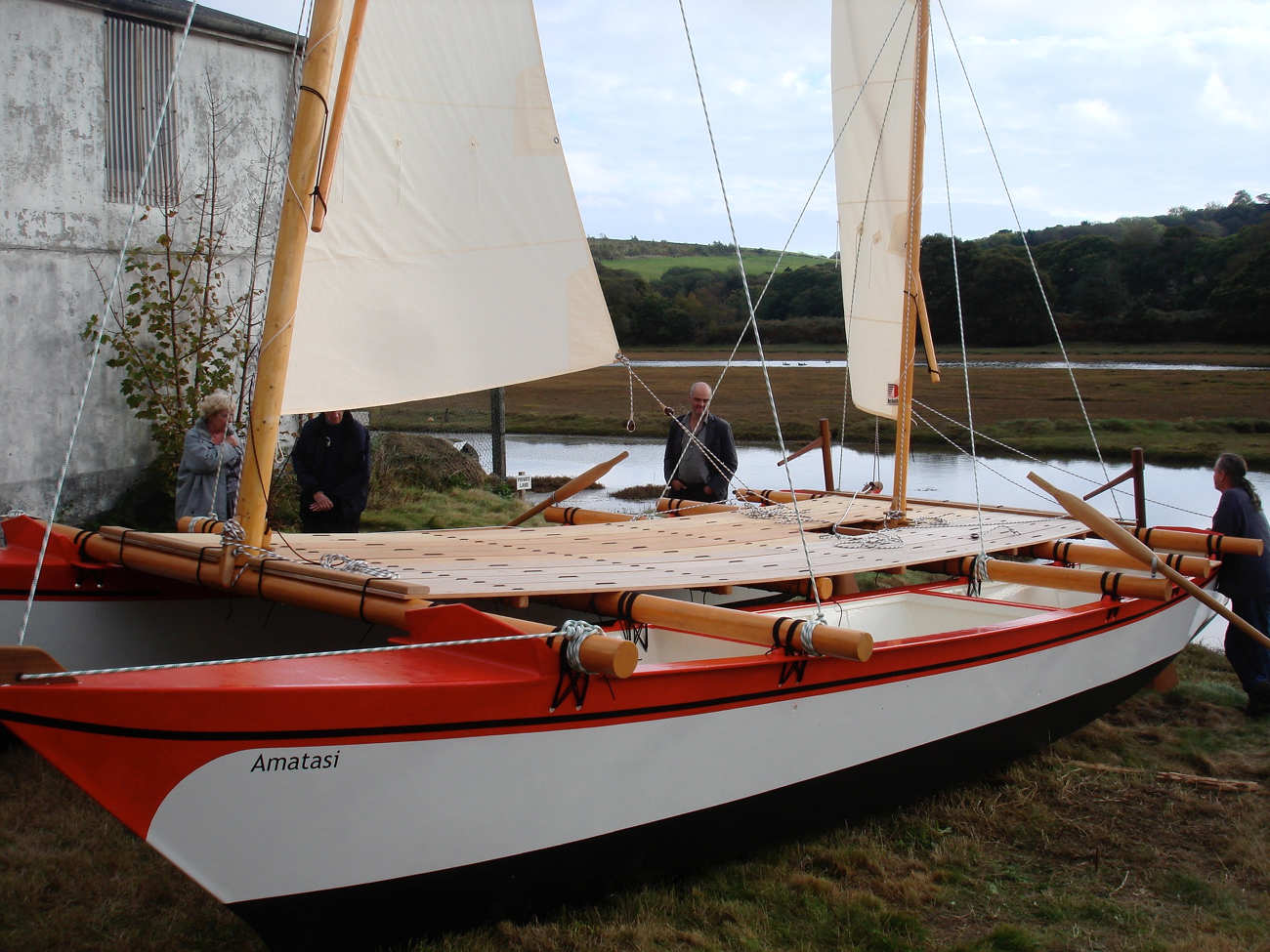
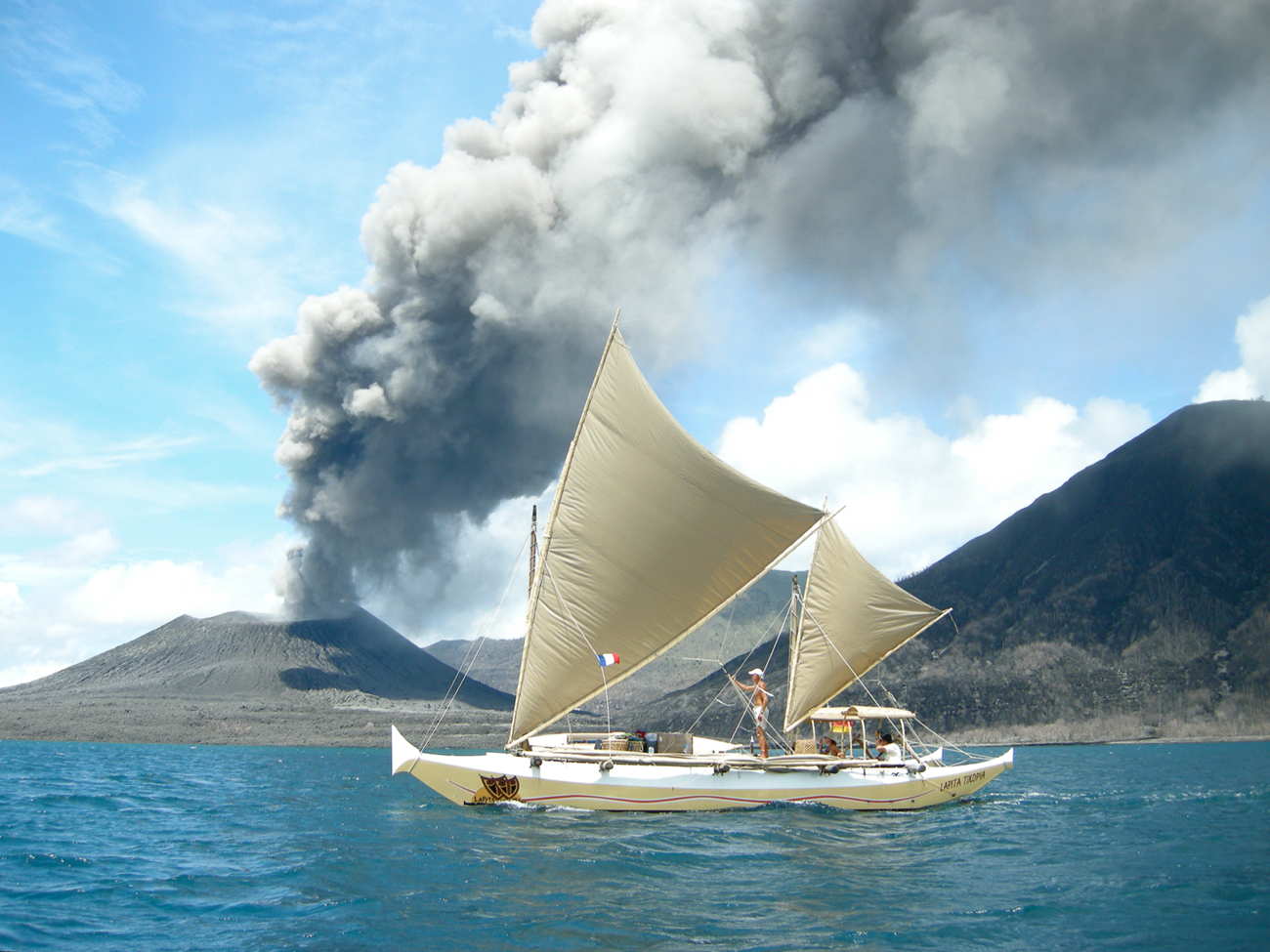


Traditional Pacific Sailing Craft
The Ethnic designs have been a new development at James Wharram Designs since James and Hanneke sailed extensively in the Pacific. With everything self-made these boats are lower cost to build. They cater for those who want a “traditional” Pacific sailing craft, built using appropriate modern materials and methods, but without trying to Westernise them. These designs arose after requests from Pacific Island peoples for James to design craft to overcome shortages of “traditional” building materials, but which closely reflect the cultural and ethnic origins of these craft.
Classic Designs
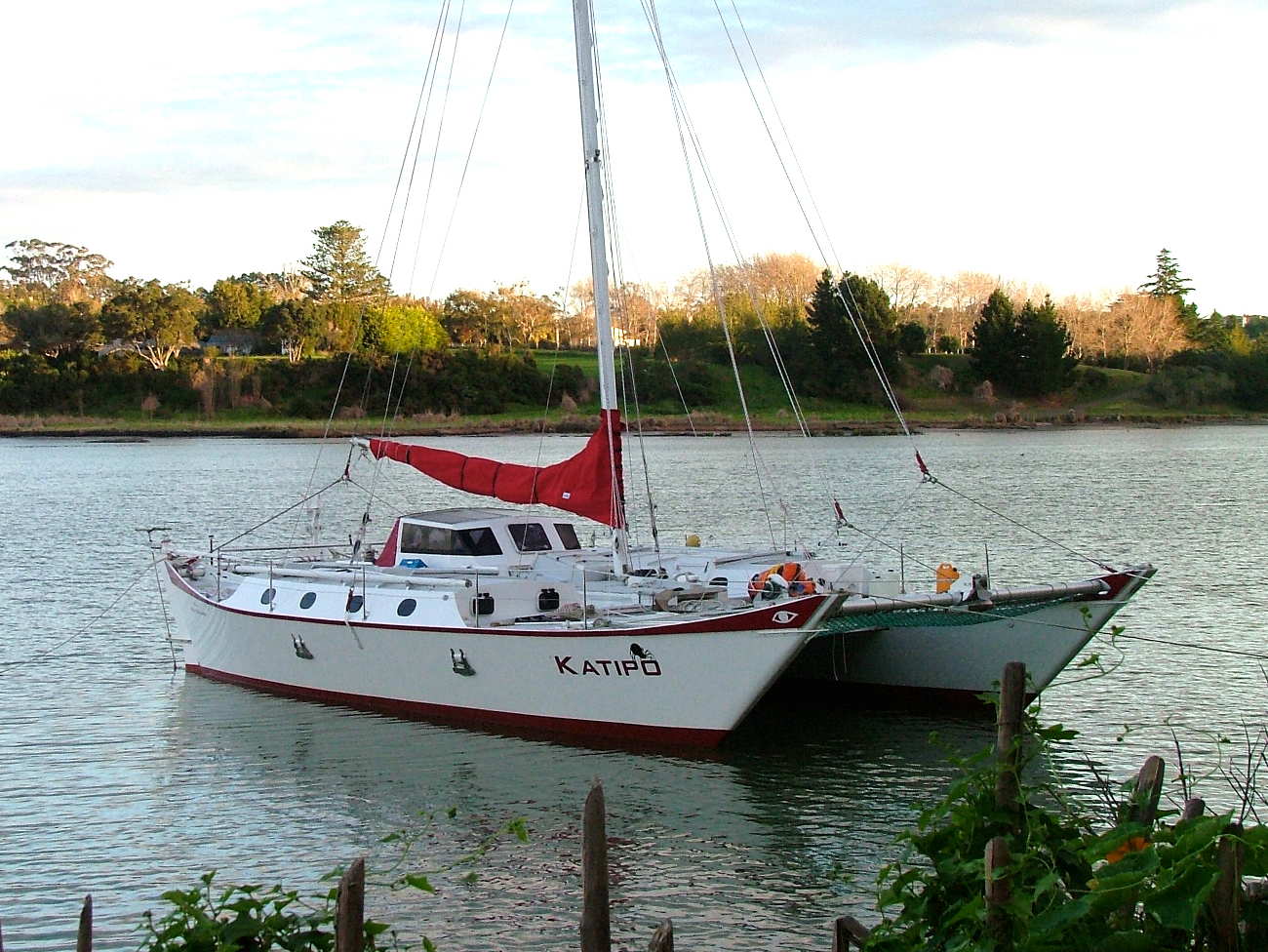

The Early Wharrams – Sturdy and Stable
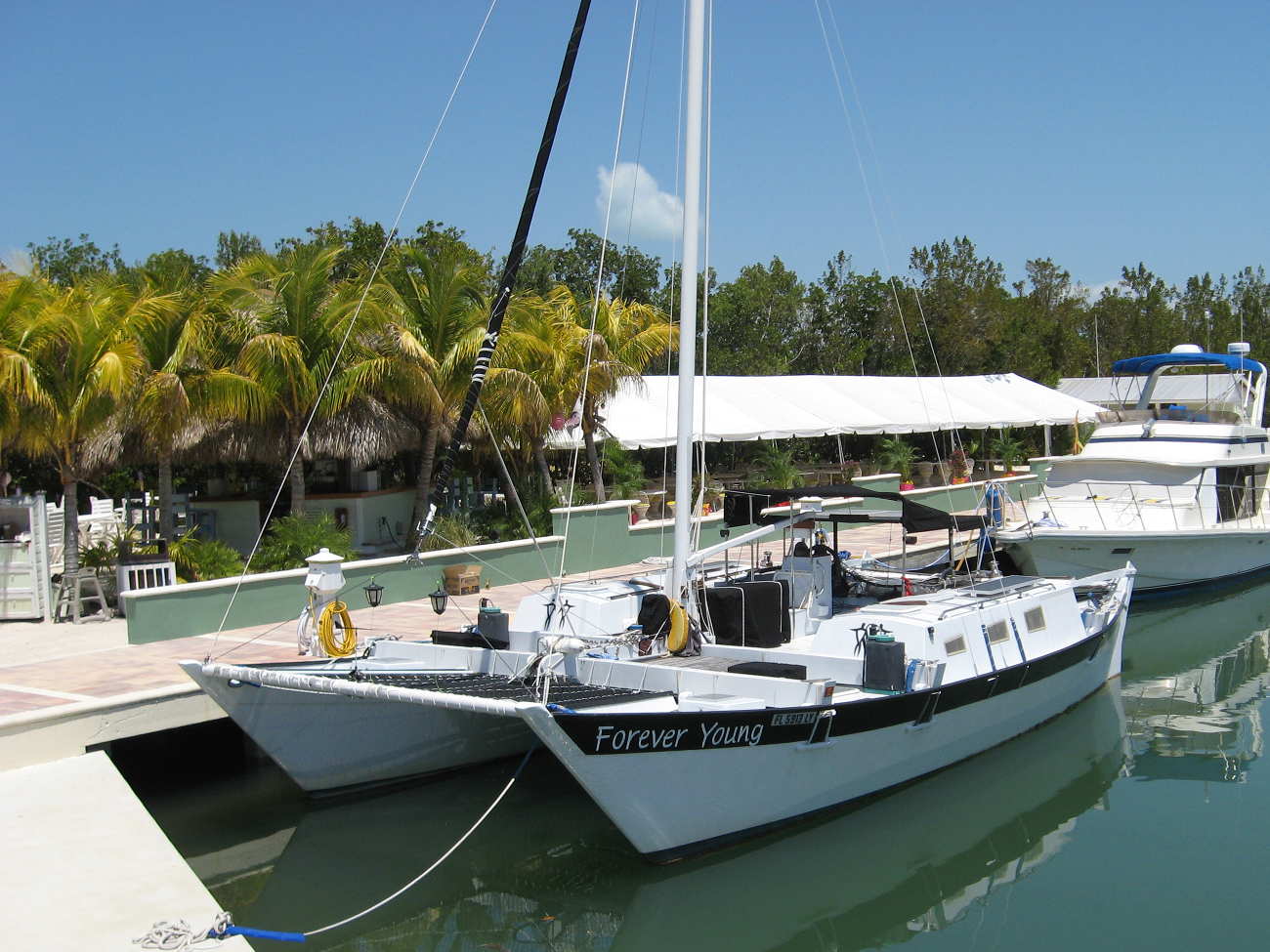
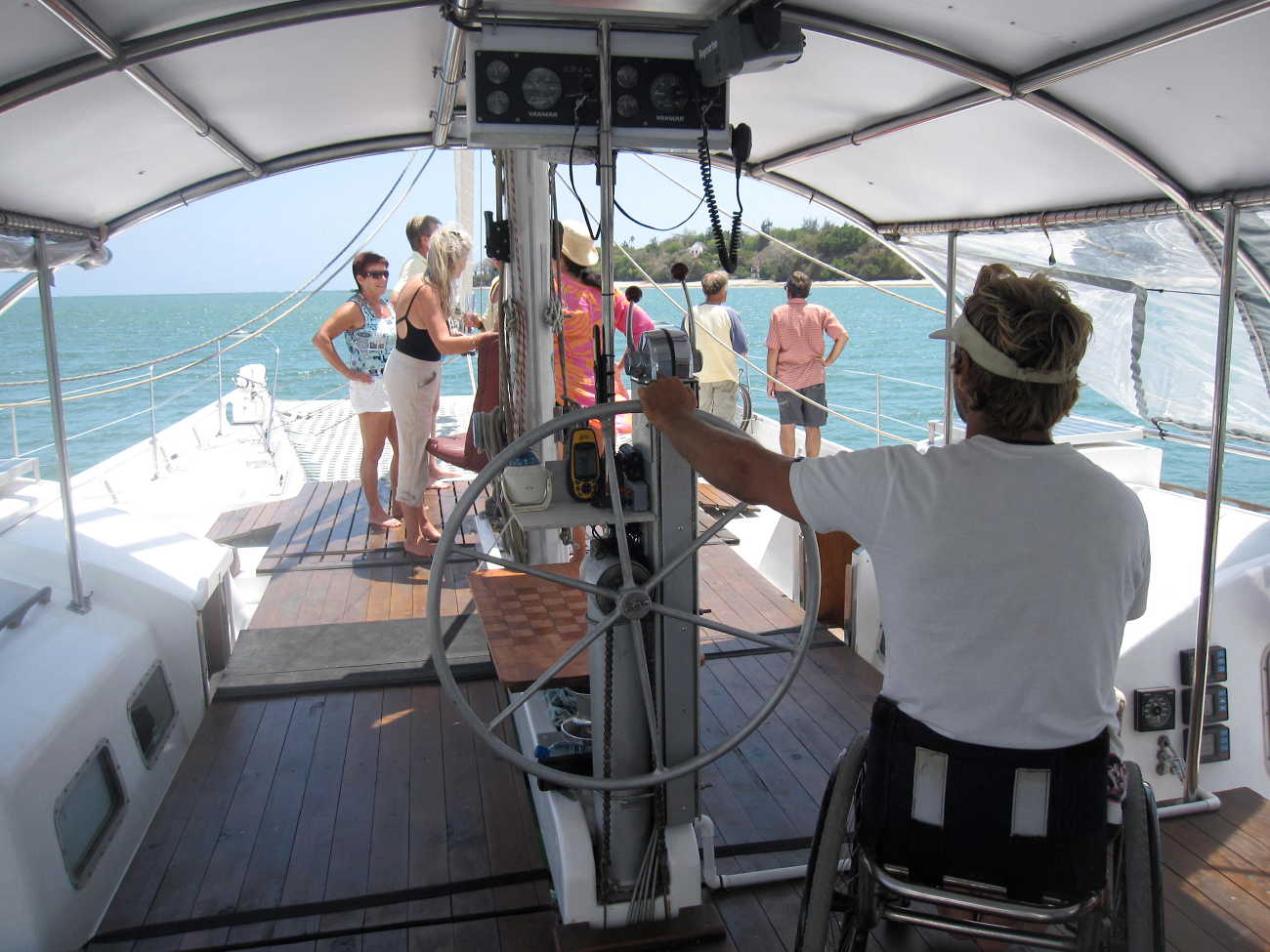
The early ‘Wharrams’, now known as the Classic Designs, are recognised as beautiful, safe boats – easy to build, and easy to sail. Many anchorages around the world are graced by these Classic Designs, and of the seventeen drawn between 1957 and 1976, nine are still available, from the 16ft Maui to the 51ft Tehini. They were the first range of Wharram catamarans, designed in the 1960s and 70s, based on the sea experience of James Wharram’s pioneering ocean crossings. They are sturdy, very stable, but relatively basic in design. They are built using simple plywood construction over a backbone and bulkhead frame.