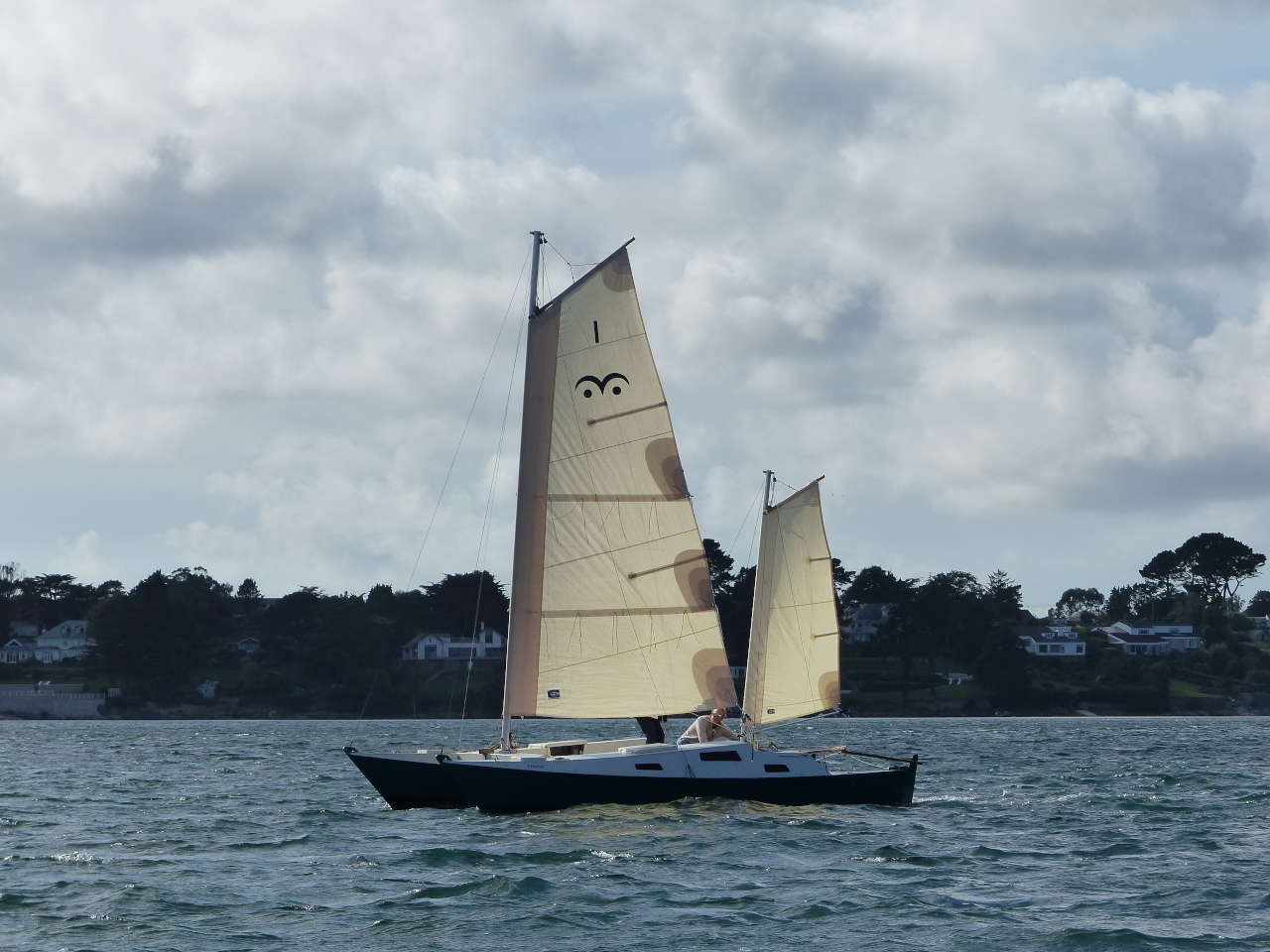
Wharram’s First Kit Boat
Introducing the CNC-cut self-build ‘Cat Kit’, a trailable family camping boat. All plywood parts are pre-cut – just take it out of the box and assemble it yourself! Keep it at home, trail it and sail it anywhere. MANA is the Polynesian word for ‘spirit’ given to an object by its maker or the person that uses it.

An Economical Way To Enjoy Sailing
Due to the present period of financial austerity and increasingly high marina costs, a large number of would-be sailors are having a hard time financing the dream of sailing their own boat.
However, there is an economical way to enjoy sailing, by building your own small lightweight boat, keeping it at home and trailing it to the waters you want to sail in, chasing the good weather. This gives the opportunity to explore many more sailing areas than if based on a permanent mooring or in a marina, and at a much lower cost. In designing the MANA, we explored this idea and looked sideways into the world of camping and the philosophy of outdoor living.
All these ideas have come together in the new MANA 24 design, a catamaran specifically designed for trailer sailing. The MANA kit is sold with all the plywood cut out by CNC cutter, so building the boat at home will be a bit like assembling a flat-pack. All the parts slot together perfectly so a hull can take shape in a day.

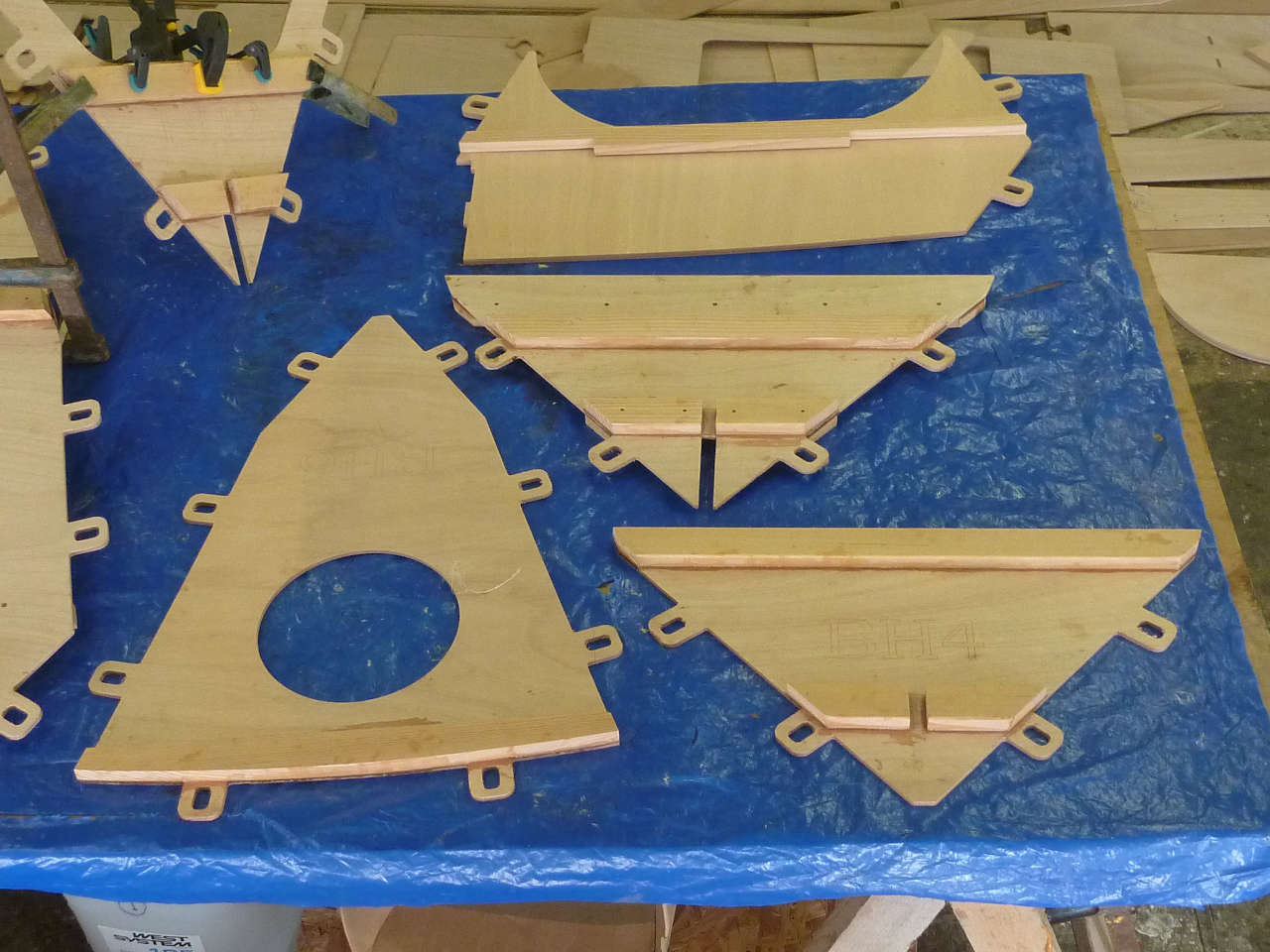
Building from such a kit takes away the worry of measuring and cutting all the boat parts, which can be quite daunting to many first time builders and saves a lot of time in the early stages of building. As she is built from a pre-cut kit, we have been able to give the Mana more complex and beautiful shaping, giving her more interior volume than the Tiki designs. During construction all the kit parts slot together and are locked with wooden wedges, giving no chance of error. Even all the stitch holes (for fastening joints with cable ties) are drilled and lines scribed where to glue on bearers and stringers.
MANA’s 23’6″ hull length has a special significance for James Wharram. In 1956 he made the first successful catamaran voyage across the Atlantic in his first catamaran, the ‘Tangaroa’, also 23’6″ long.
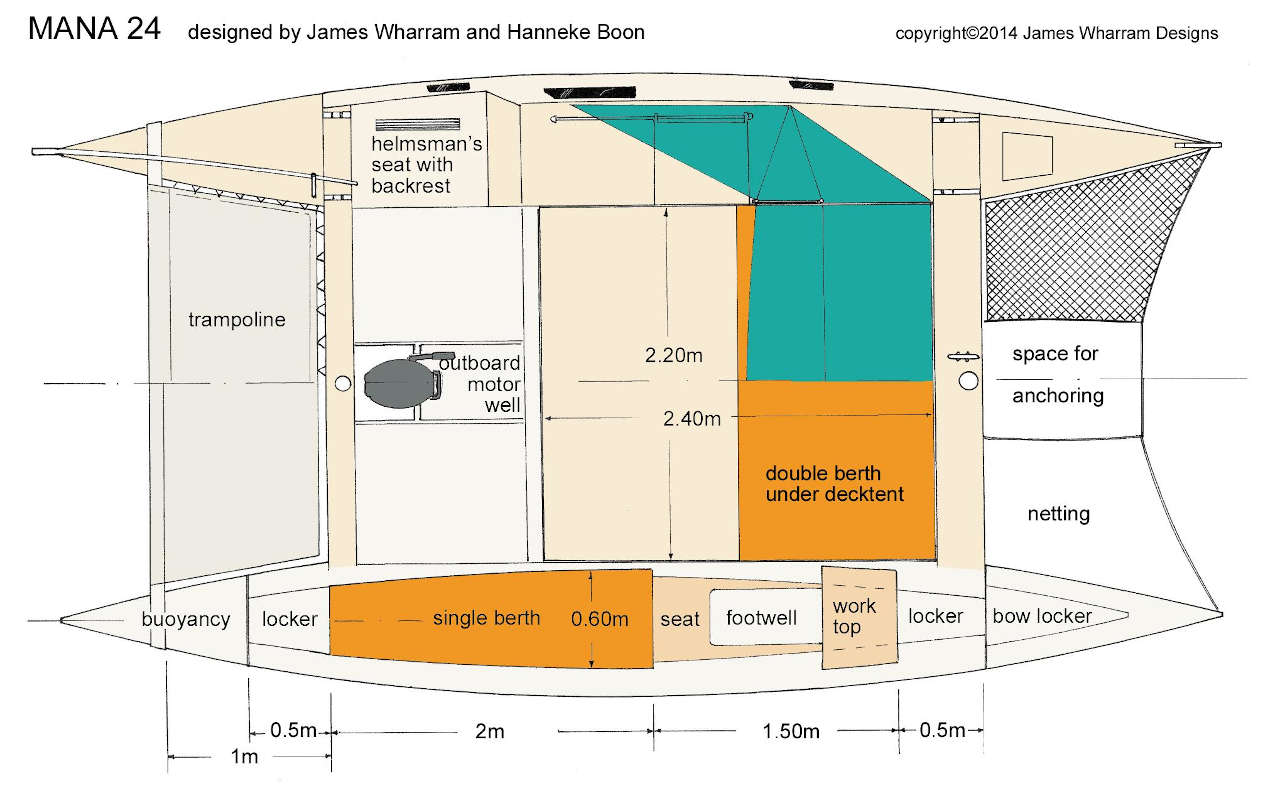
In trailer/sailer design every increase in length equals harder launching and recovery work. At 23’6″- 7.15m hull length MANA 24 sits between our TIKI 21 and TIKI 26 designs (both very popular trailer sailers), with easier launching and handling like the smaller TIKI 21, but an interior space close to that of the Tiki 26. Her new chined hullshape gives more width for the bunks, which are placed aft where the hulls are widest, and where there is least motion.
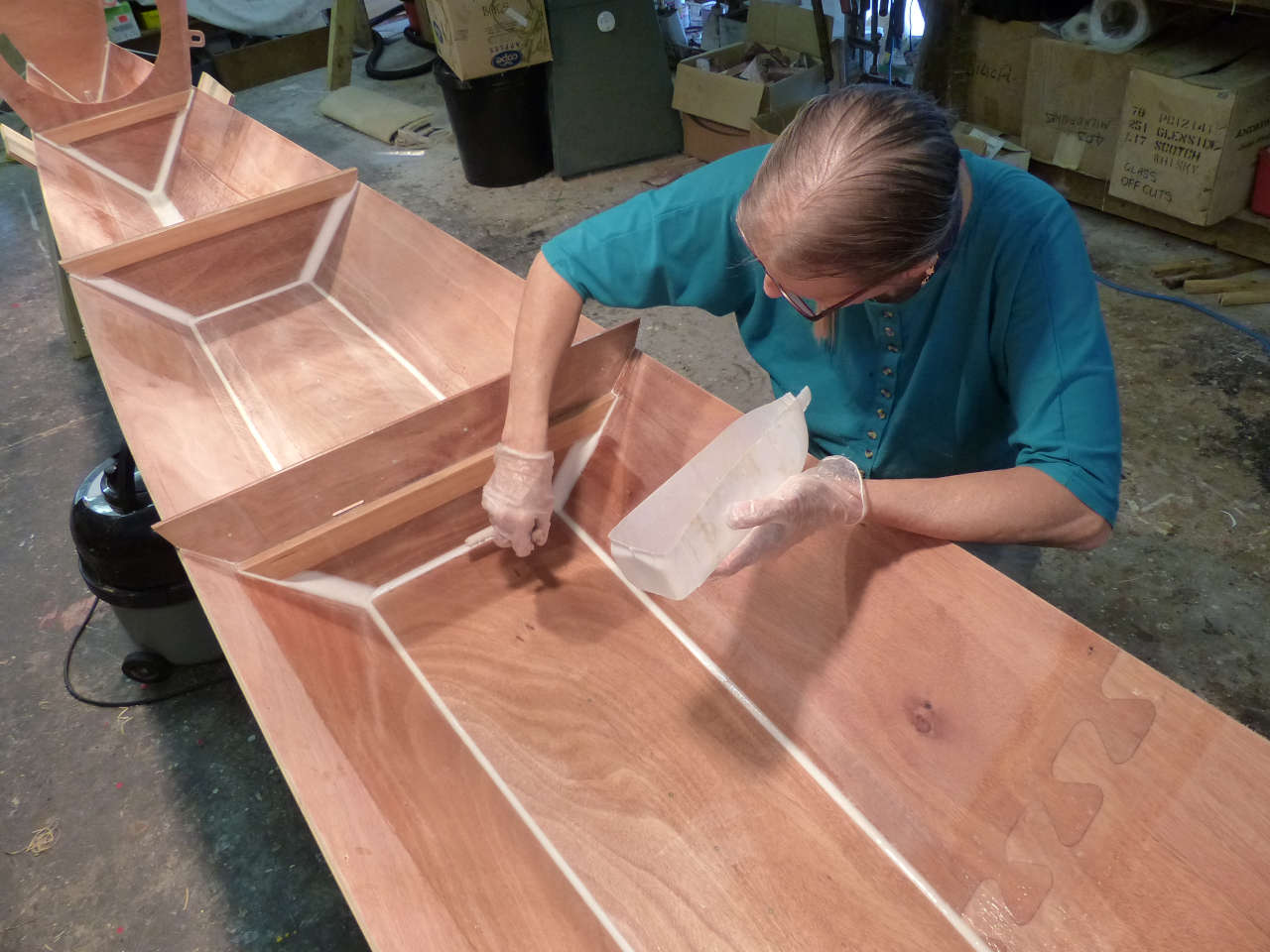
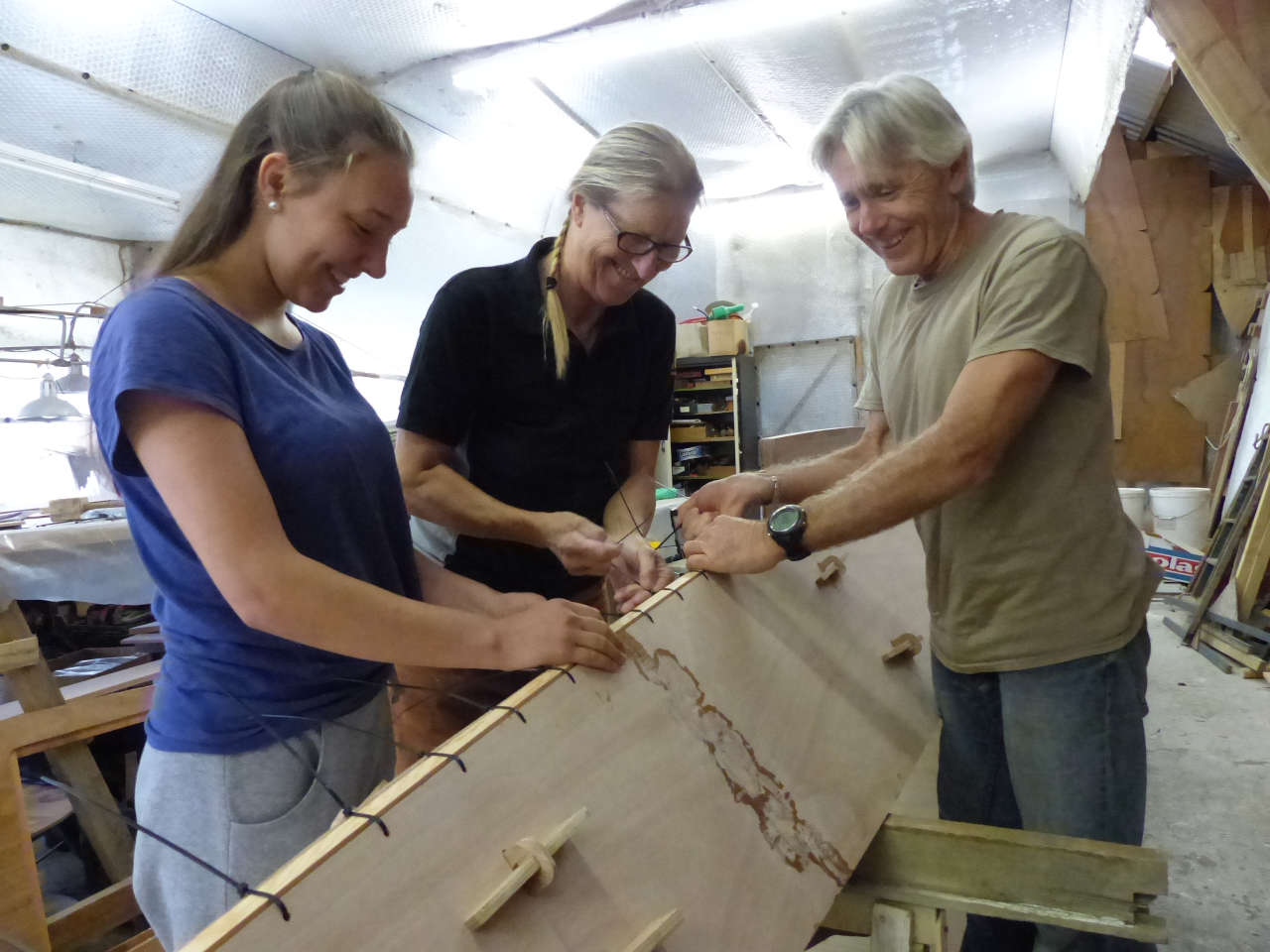
For speedy assembly the hulls and beams of the MANA are connected with quick-fit webbing straps with over-centre buckles, which are very strong and much easier to fit than bolts.
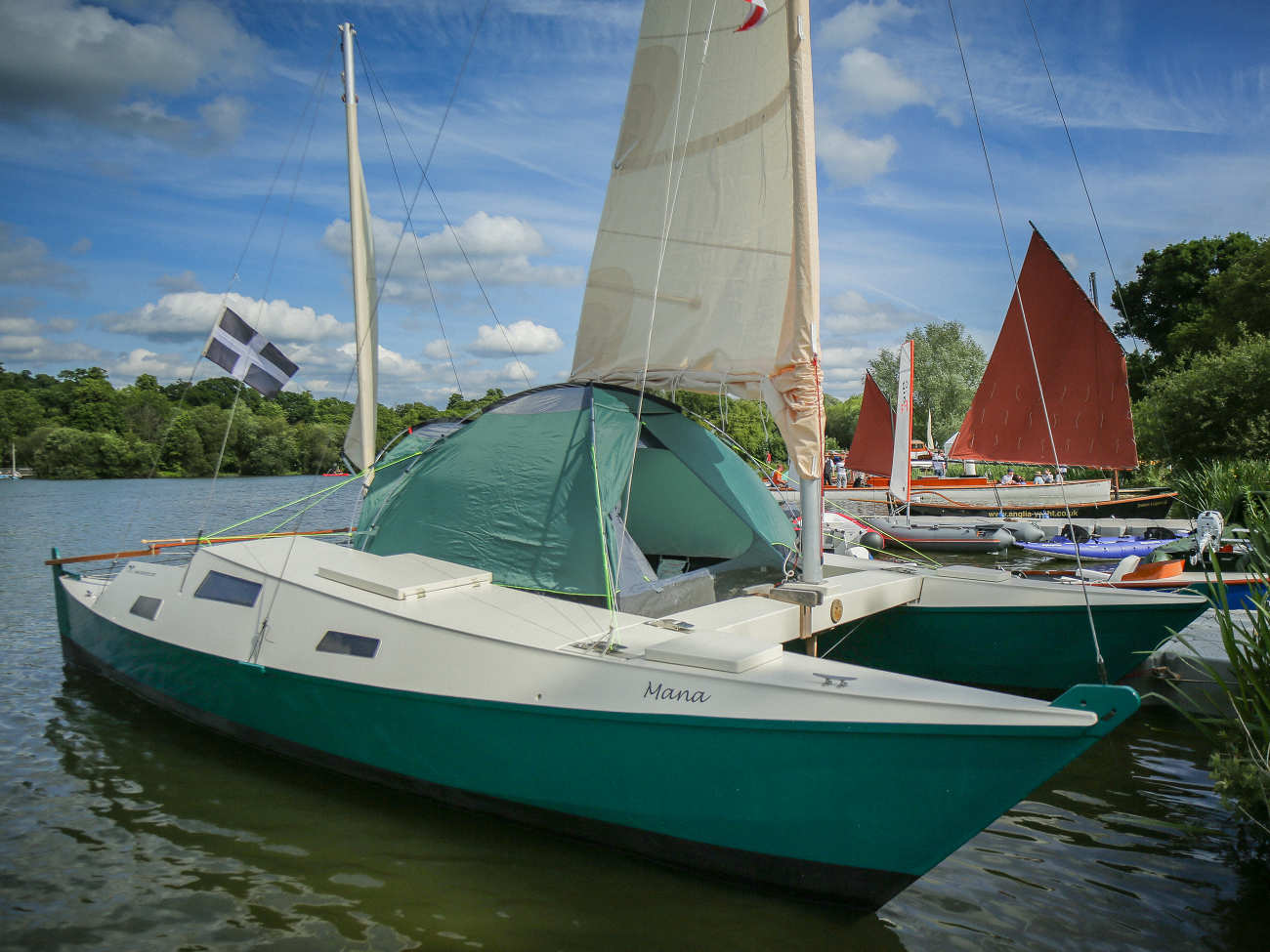
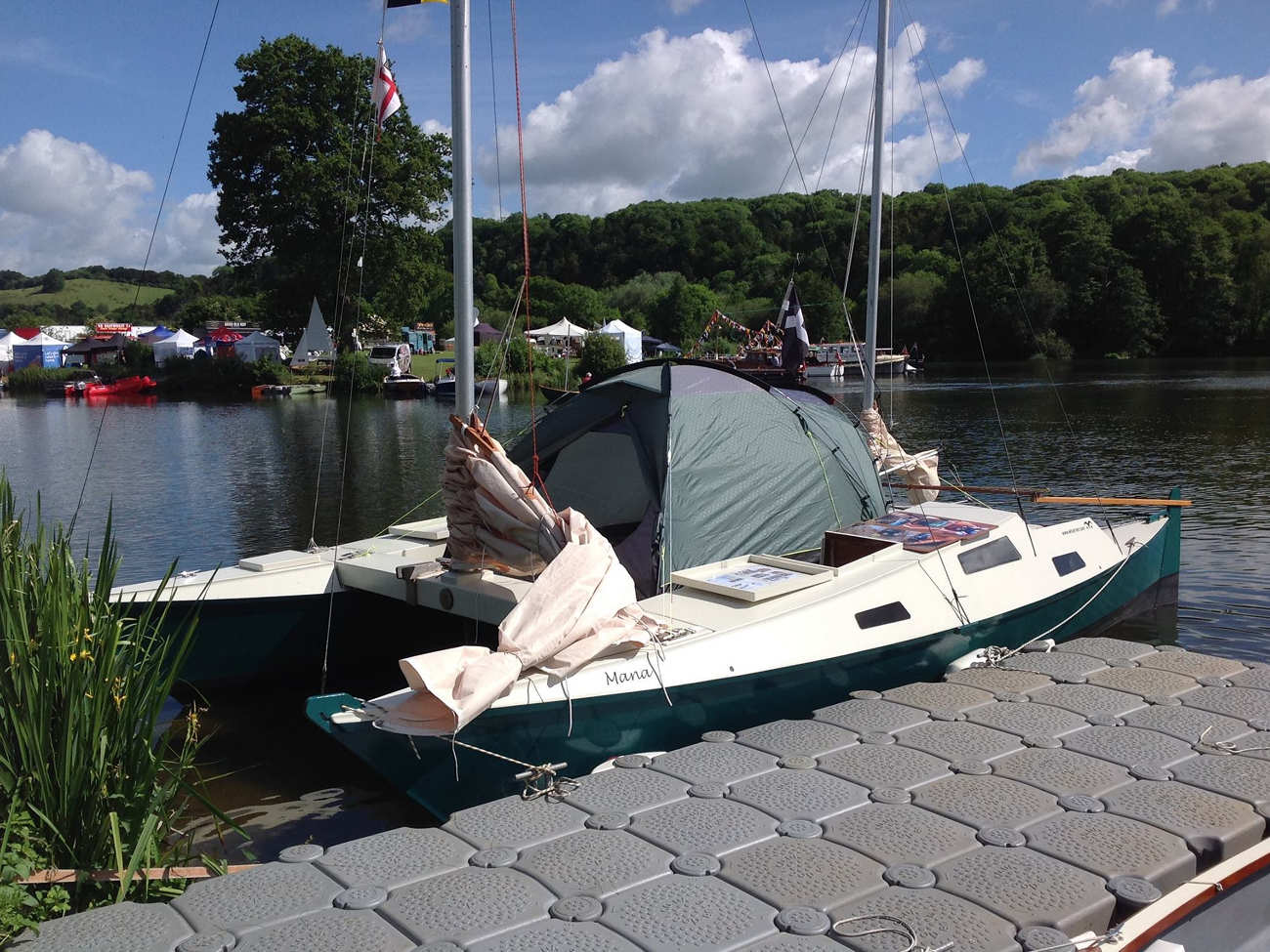
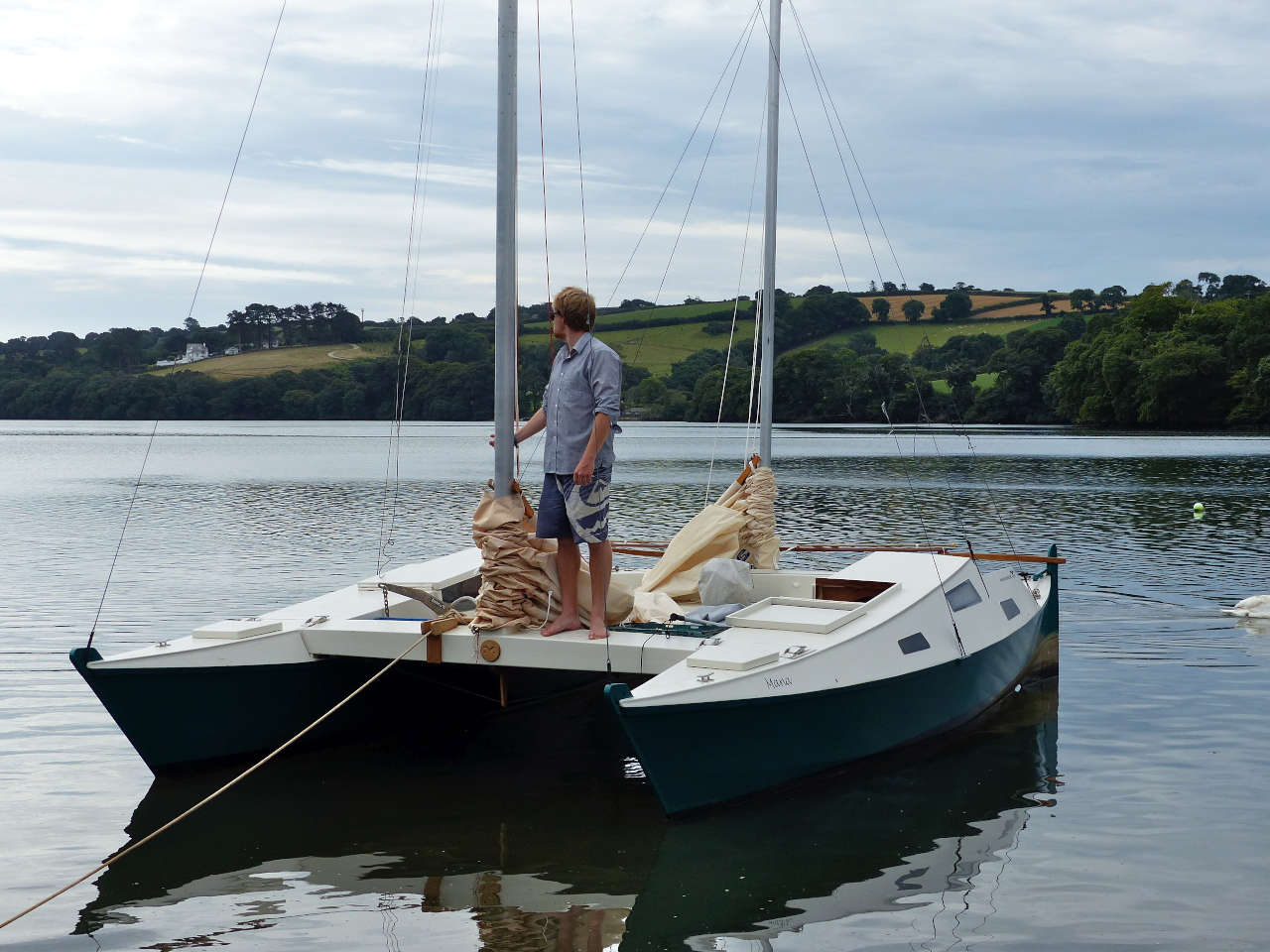
With the main mast of the MANA placed well forward the platform gives ample flat space for a low cost dome tent or a custom-made pramhood tent, which can double as spray hood when sailing. Adapting camping habits to a sailing lifestyle gives wider sailing opportunities at minimum cost and lots more family fun!
MANA uses the well proven Wharram Wingsail rig in a new Catrig configuration. The Wingsail rig is a modern version of a high aspect Dutch style gaff rig, sleeved round the mast for maximum aerodynamic efficiency.
In this new Catrig configuration the mainsail gives the drive with a very clean leading edge. The small mizzen aids with balance, steering and tacking. Having no jib, there is no need for a very tight forestay. The standing rigging uses the latest dyneema rope, which is light and can be spliced by the builder. The mizzenmast can be used as sheer pole for single-handed assembly.

Mana 24 Design Data
| Building Method: | Ply/Glass/Epoxy/Laminate | |
|---|---|---|
| Length Overall: | 23′ 6″ | 7.16 m |
| Beam Overall: | 12′ 8″ | 3.85 m |
| Waterline length: | 20′ 10″ | 6.35 m |
| Beam of each hull: | 3′ 2″ | 0.97 m |
| Max draft: | 18.5″ | 0.47m |
| Headroom over seat/bunk: | 3′ | 0.90 m |
| Sleeping capacity: | 2 single bunks in hulls, double birth under decktent | |
| Dry weight (approx): | 1190 lbs | 540 kg |
| Maximum displacement (Approx): | 2510 lbs | 1140 kg |
| Sail area: | 216 sqft | 19.6 sqm |
| Deck sleeping area: | 7’3″ x 8′ | 2.20m x 2.45m |
| Full deck area: | 7’3″ x 11’6″ | 2.20m x 3.50m |
Who Makes The Kit
In 2025 we stopped producing the Mana kit in Cornwall and handed the production over to Chesapeake Light Craft (CLC), the large, well established kit producers in Annapolis, USA. They have over 30 years experience in producing CNC kits for small boats and were delighted to take on the Wharram Mana 24.
Chesapeake Light Craft have liaison agreements with kit producers in other countries including the UK, Germany and Tasmania, who can cut your CNC ply kit.
What You Get In A Mana Kit
The Mana kit, as supplied by CLC, can be bought in three parts:
- All CNC cut plywood parts
- Timber parts
- Epoxy materials
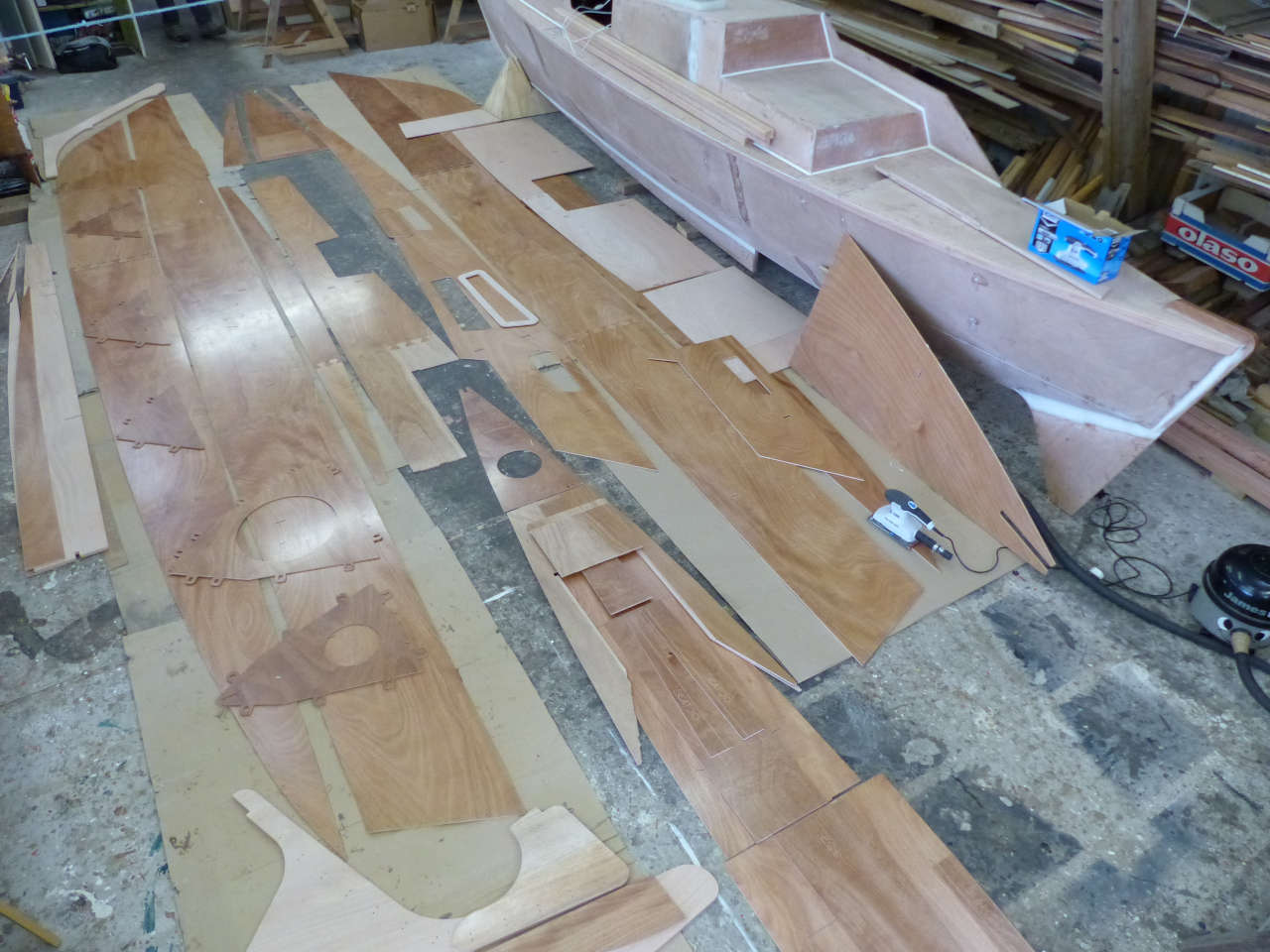

When you buy the kit from the CLC website you will receive the plans and builders number from James Wharram Designs, as well as support during building. The JWD royalty for the design is included in the price of the CNC plywood parts. They can not be bought separately, or in advance.
The plans give detailed lists of all fastenings, fittings, blocks, ropes and rigging, so the builder can source these themselves.
The pictures below show what you will need.
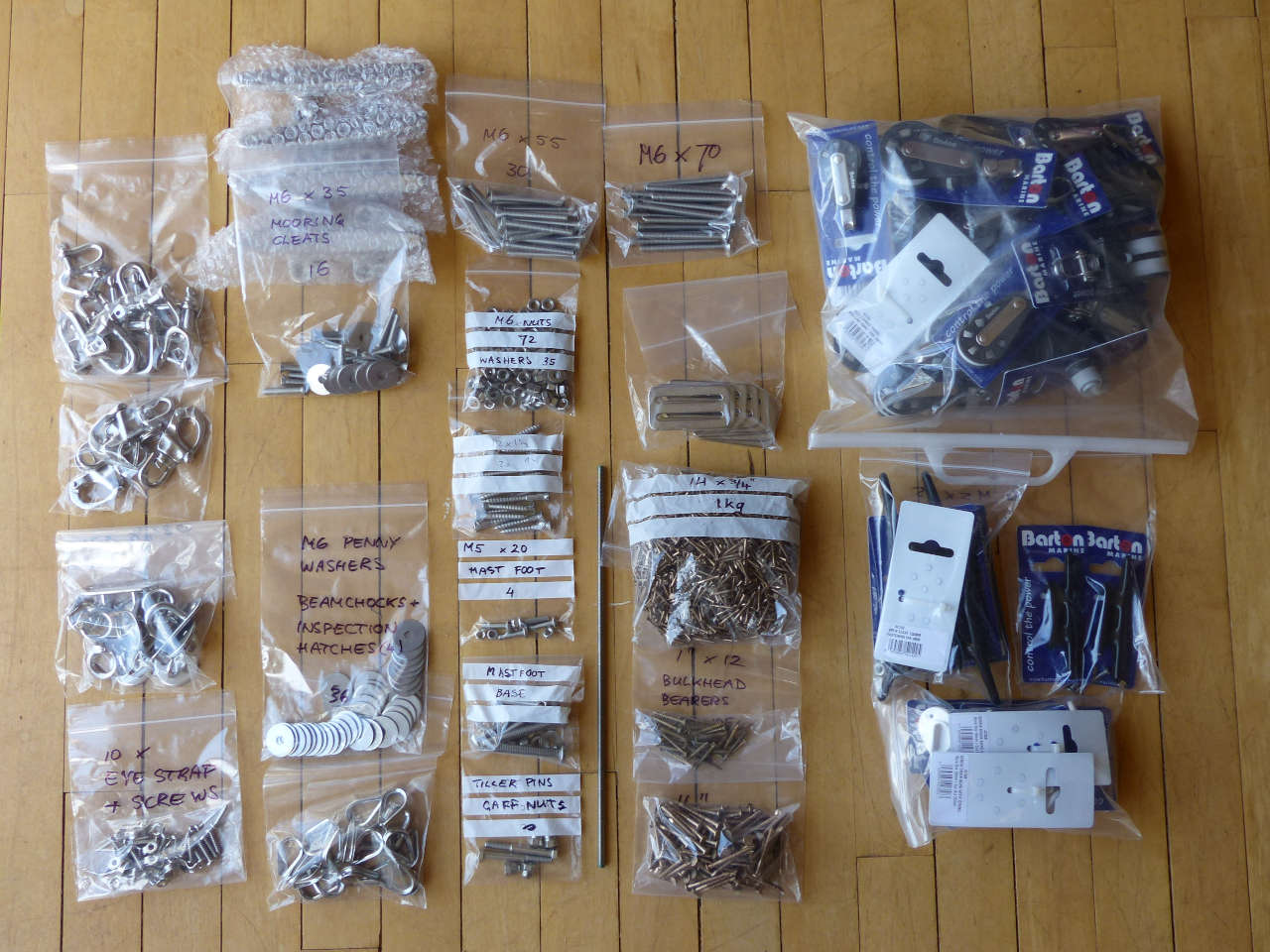
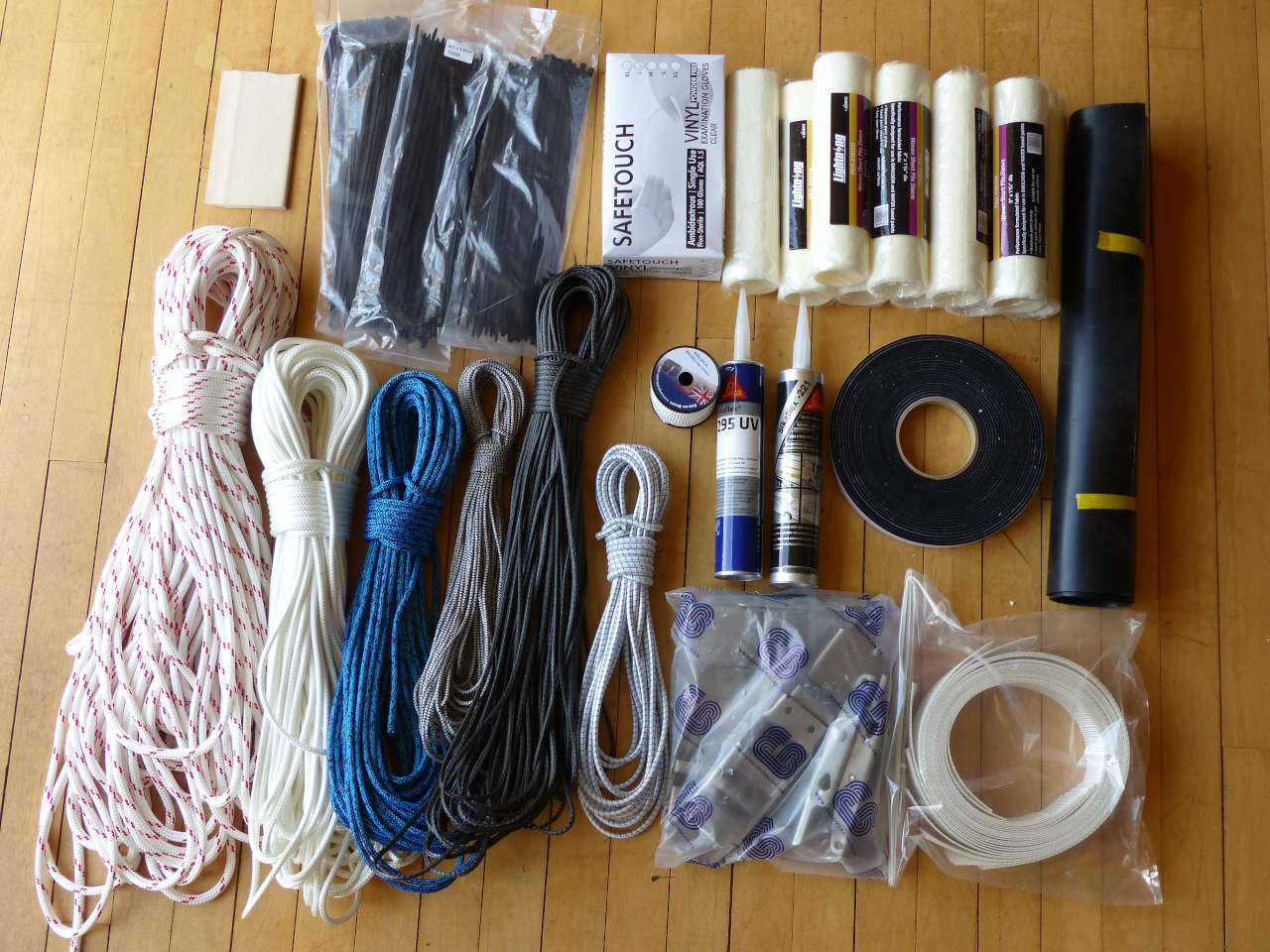
Aluminium tubes for masts to be bought direct from independent suppliers. The specifications are in the plans. There are also drawings for fabricating simple mast fittings.
Jeckells Sails have been making Wharram Wingsails and the Mana sails for many years. You can order the sails via James Wharram Designs.
Placing an Order
Chesapeake Light Craft (USA):
You will find the prices for the kit on the CLC website. CLC will be handling each order individually due to different options and shipping costs, so if you would like to discuss ordering a Mana kit, please contact CLC. They will be able to work out shipping details to your building site and supply you with a pro forma invoice.
Fyne Boat Kits (UK and Europe):
If you are in the UK or Europe and would like to order your kit cut by Fyne Boat Kits, please contact James Wharram Designs who will help you place your order.

Sizes and Weights
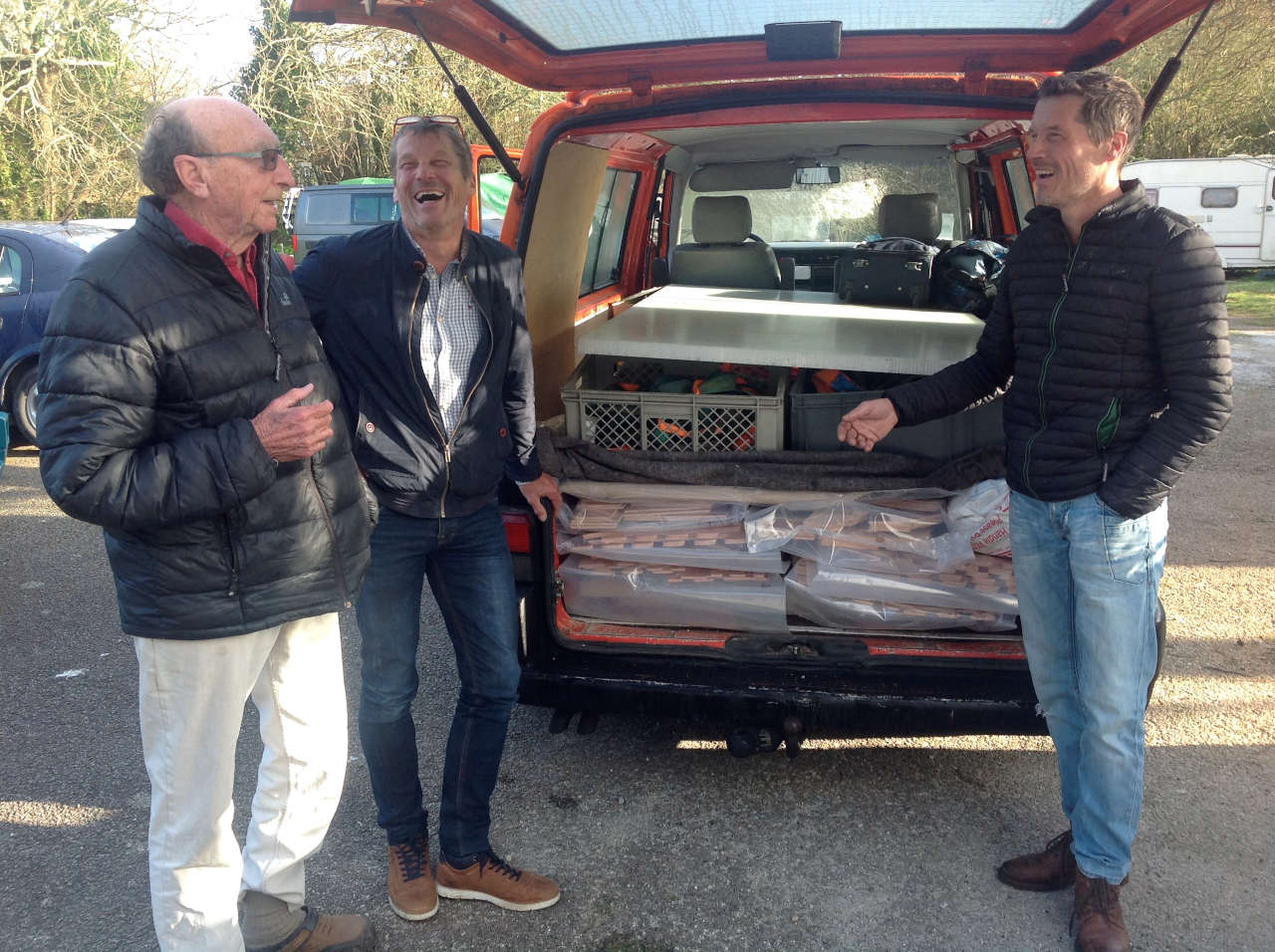
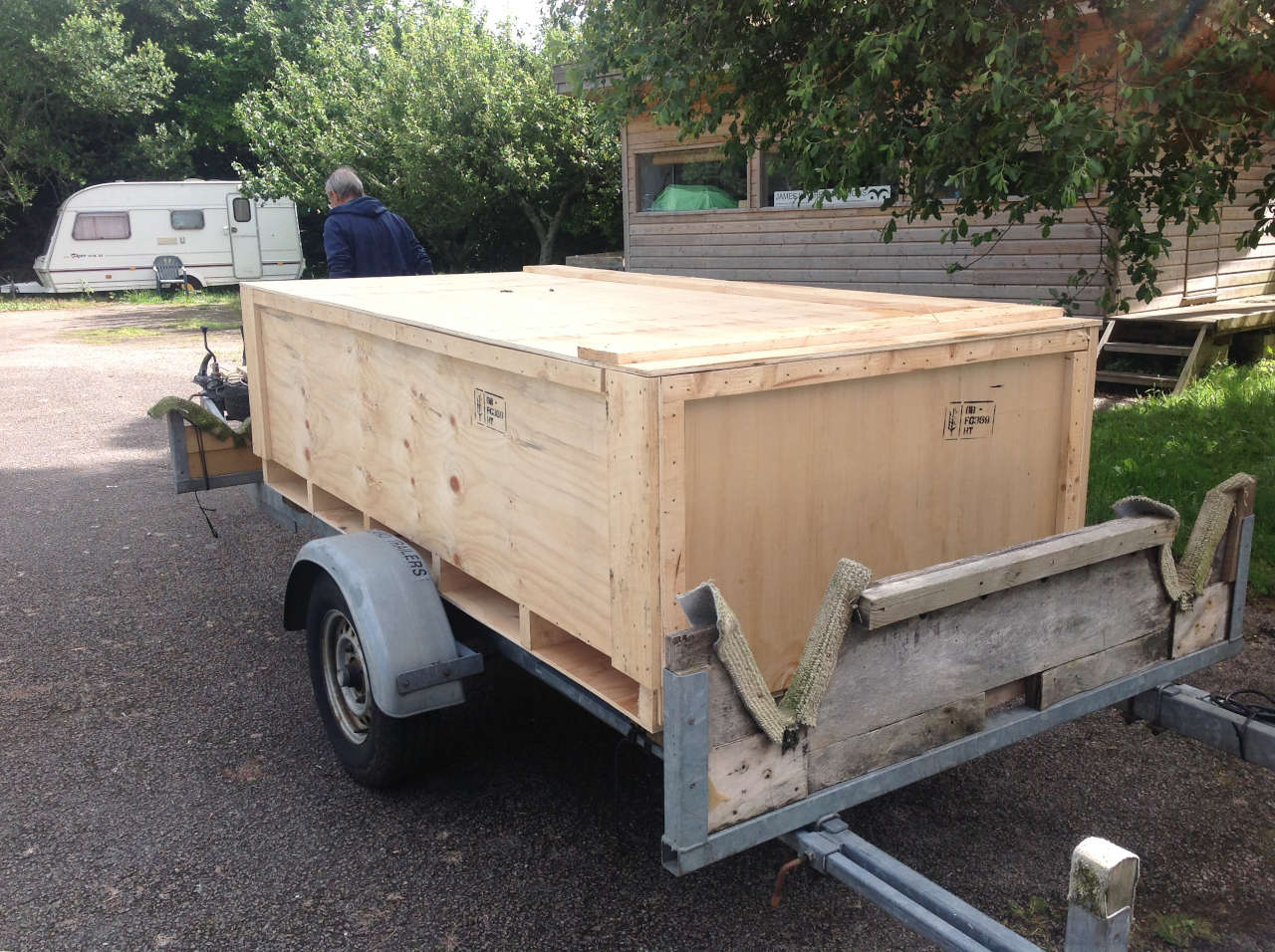
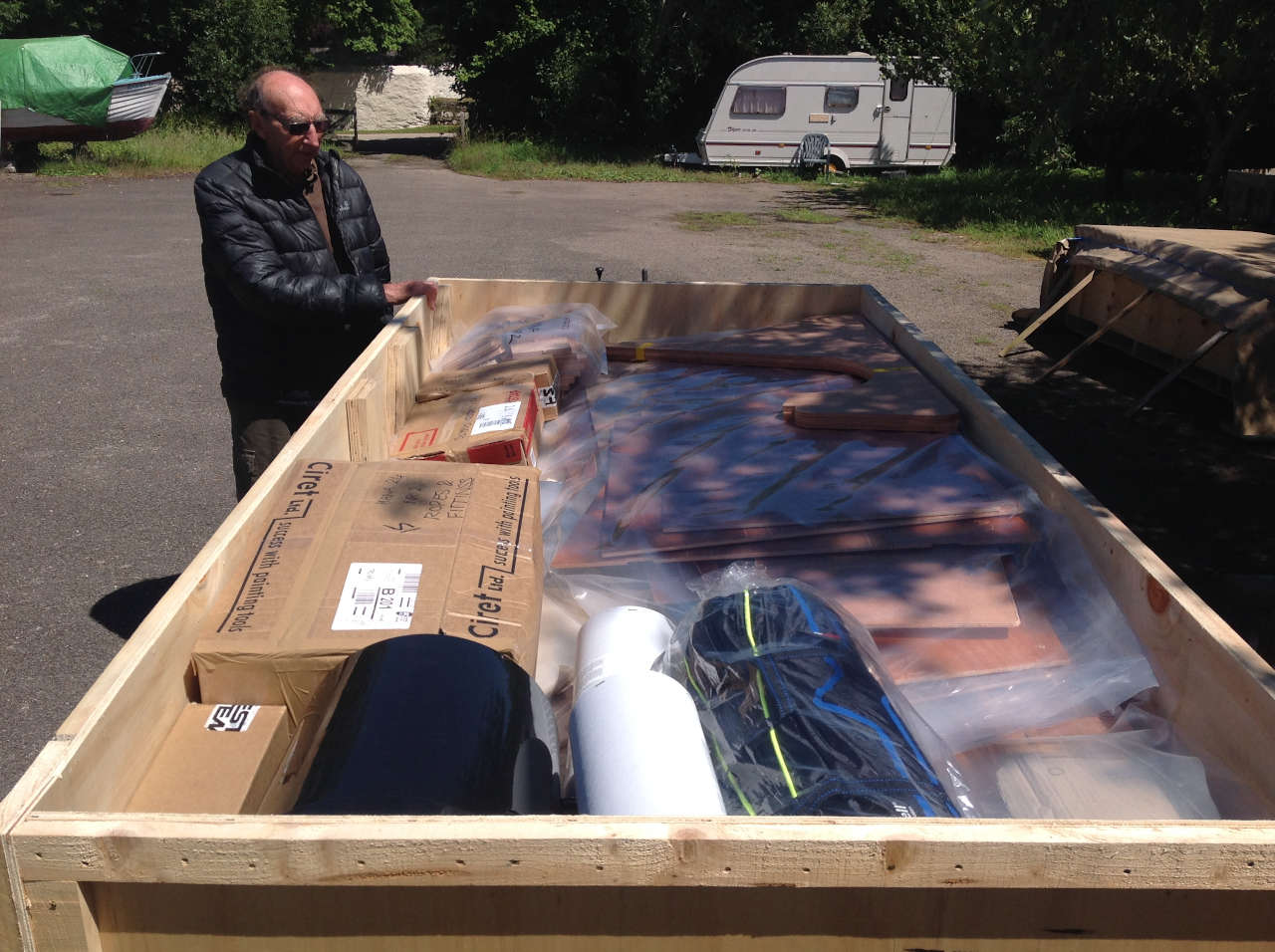
- The plywood kit will measure approx. 2.5m x 1.20m x 0.3m and weighs around 300kg
- The WEST epoxy kit measures approx. 1.3m x 0.6m x 0.45m and weighs around 100kg
- Timber will be a long parcel (around 3.5m – 4m long) and will weigh around 50-60kg
Transporting the Mana Kit
The entire kit can fit in the back of a van. The van in the photos is a VW Transporter.

Boat in a Box
Your Mana 24 kit if shipped, will arrive in a box like this! Does not include long timbers.
Building Time Estimate
We kept precise building hours while building the prototype. We built to a high quality standard with excellent finish, i.e. a lot of time spent on precision sanding, fairing etc. Building time in the early stages of building is greatly reduced by the CNC cut plywood parts, which takes away all the worry of measuring and cutting and lets the builder assemble the hulls very quickly.
Summing up of the times we took:
- All construction work; hulls, beams, gaffs, tillers, hatches, including epoxy coating all interior surfaces: approx. 500 hours
- All exterior glassing work; hulls and crossbeams: 90 hours
- All sanding of glassed surfaces: 45 hours
- Painting, two coats epoxy primer, two coats 2-pack topcoat including non-slip decks and antifouling, including masking: approx. 80 hours
N.B. What should be noted is how many hours it takes to do sanding and painting compared to the building time. Glassing, sanding, fairing and painting added up to 30% of the total building time. On our basic building time estimates in our Design Book, final finishing and painting are not taken into account. Working from a kit does save many hours.