
The Early Wharrams – Sturdy and Stable
The early ‘Wharrams’, now known as the Classic Designs, are recognised as beautiful, safe boats – easy to build, and easy to sail. Many anchorages around the world are graced by these Classic Designs, and of the seventeen drawn between 1957 and 1976, nine are still available, from the 16ft Maui to the 51ft Tehini.
They were the first range of Wharram catamarans, designed in the 1960s and 70s, based on the sea experience of James Wharram’s pioneering ocean crossings. They are sturdy, very stable, but relatively basic in design. They are built using simple plywood construction over a backbone and bulkhead frame.
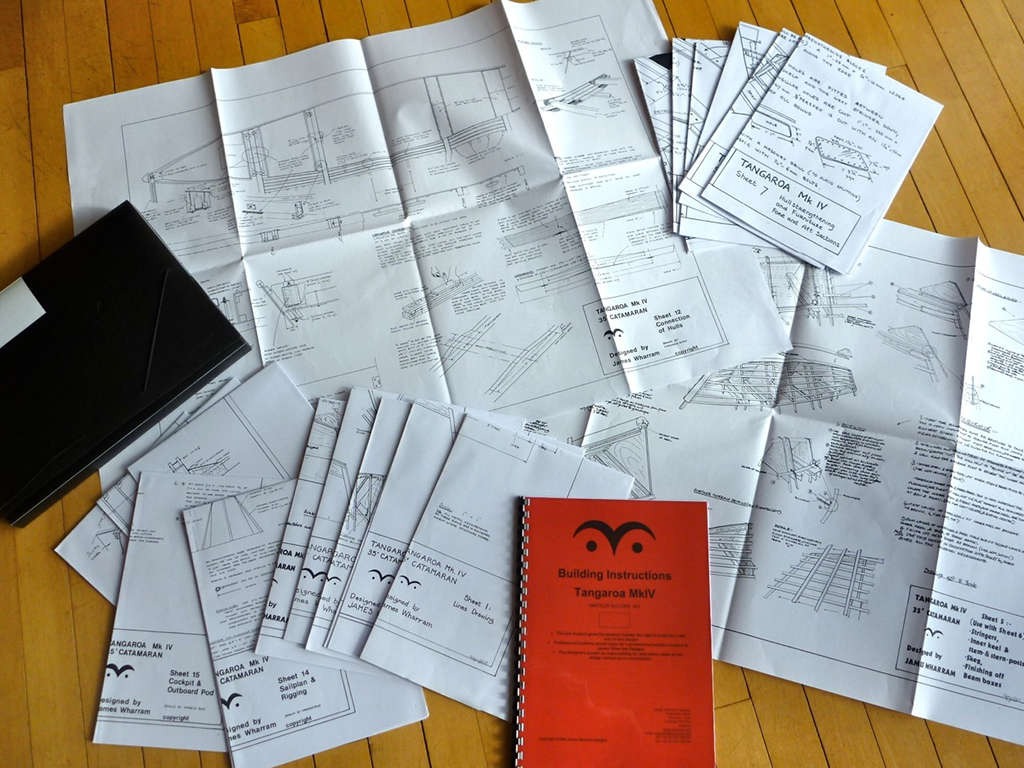
About Classic Design Building Plans
The Classic Designs Building Plans follow a sequential drawing layout, drawn to scale on large sheets, showing the boat at different building stages and clearly showing which parts are added at each stage. They are accompanied by a written building sequence giving details of every stage of the construction. There are also written Building Instructions with advice on all aspects of the build, from advice on work shelters and the buying of timber and plywood, to encouragement for your first sail. Design Improvement packages are available to update the Classic Designs, whether building new or renovating an existing design.
See information about building costs.
What’s In Our Plans?
In this video, we open up an example of a full set and walk you through the contents – from the large-scale technical drawings to the beautifully illustrated A3 sketchbook that guides you step by step through the build. If you’ve ever wondered about building your own Wharram, this video gives you a real, hands-on look at what to expect inside the plans.
Maui
| Building Method: | Ply/Timber/Epoxy/Laminate | |
|---|---|---|
| Length Overall: | 16′ 9″ | 5.10 m |
| Beam overall: | 8′ | 2.44 m |
| Waterline length: | 13′ 7″ | 4.15 m |
| Draft: | 11′ | 0.23 m |
| Weight: | 400 lbs | 180 kg |
| Loading capacity: | 440 lbs | 200 kg |
| Sail area: | 100 sqft | 9.3 sqm |
| Building Time Estimate: | 200 hours | |
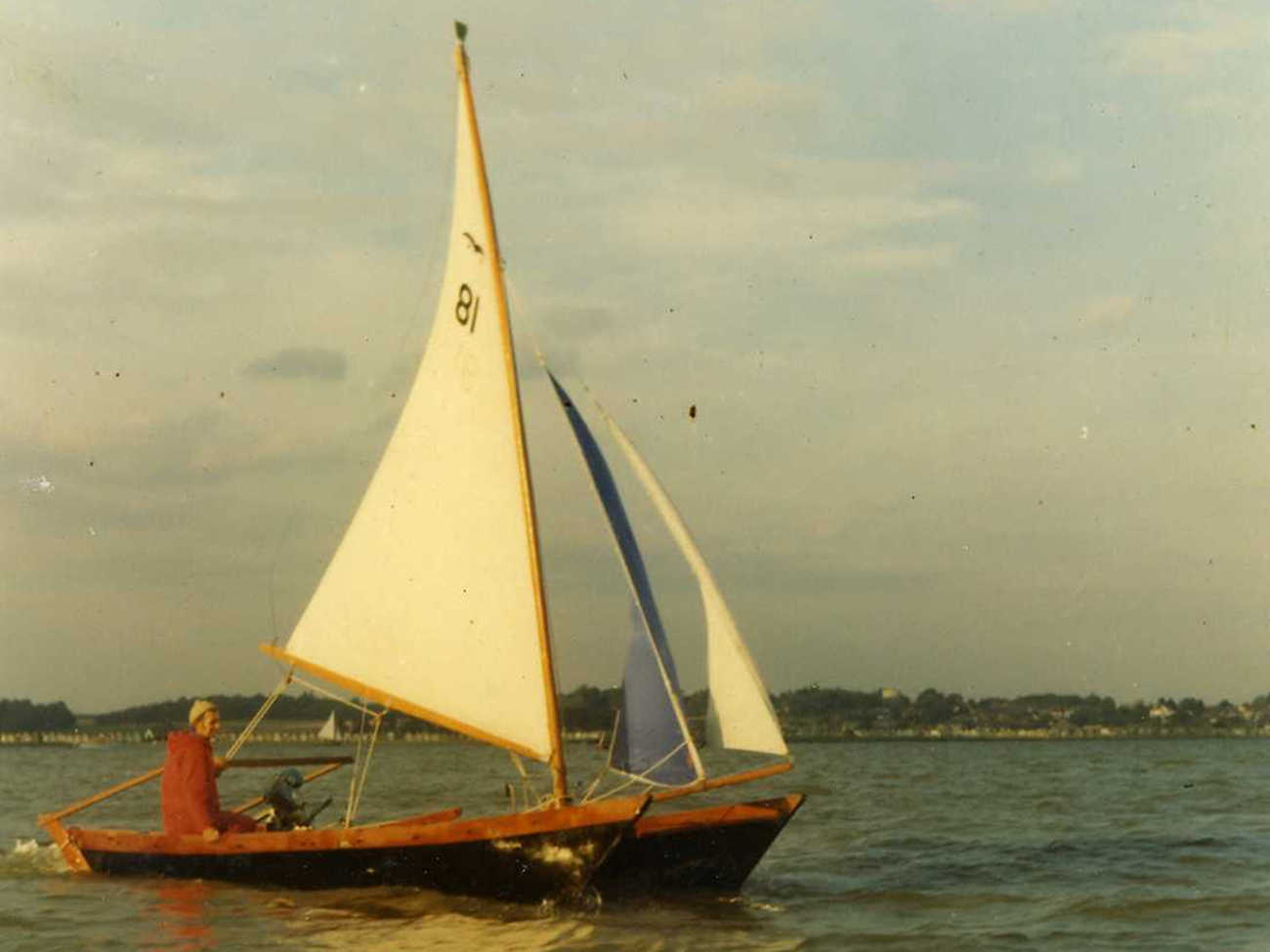
The Maui is the smallest Classic design, very sturdy in build using backbone and bulkheads, with solid timber keel, and hence heavier than the more modern stitch & glue Hitia 17.
Suitable as a small workboat, or when one wants to leave the boat on a rough mooring.
Hinemoa
| Building Method: | Ply/Timber/Epoxy/Laminate | |
|---|---|---|
| Length Overall: | 23′ | 7.10 m |
| Beam overall: | 11′ 4″ | 3.46 m |
| Waterline length: | 19′ | 5.80 m |
| Draft: | 1′ 3″ | 0.38 m |
| Weight: | 1150 lbs | 530 kg |
| Loading capacity: | 1000 lbs | 460 kg |
| Sail area: | 173 sqft | 16 sqm |
| Building Time Estimate: | 500 hours | |
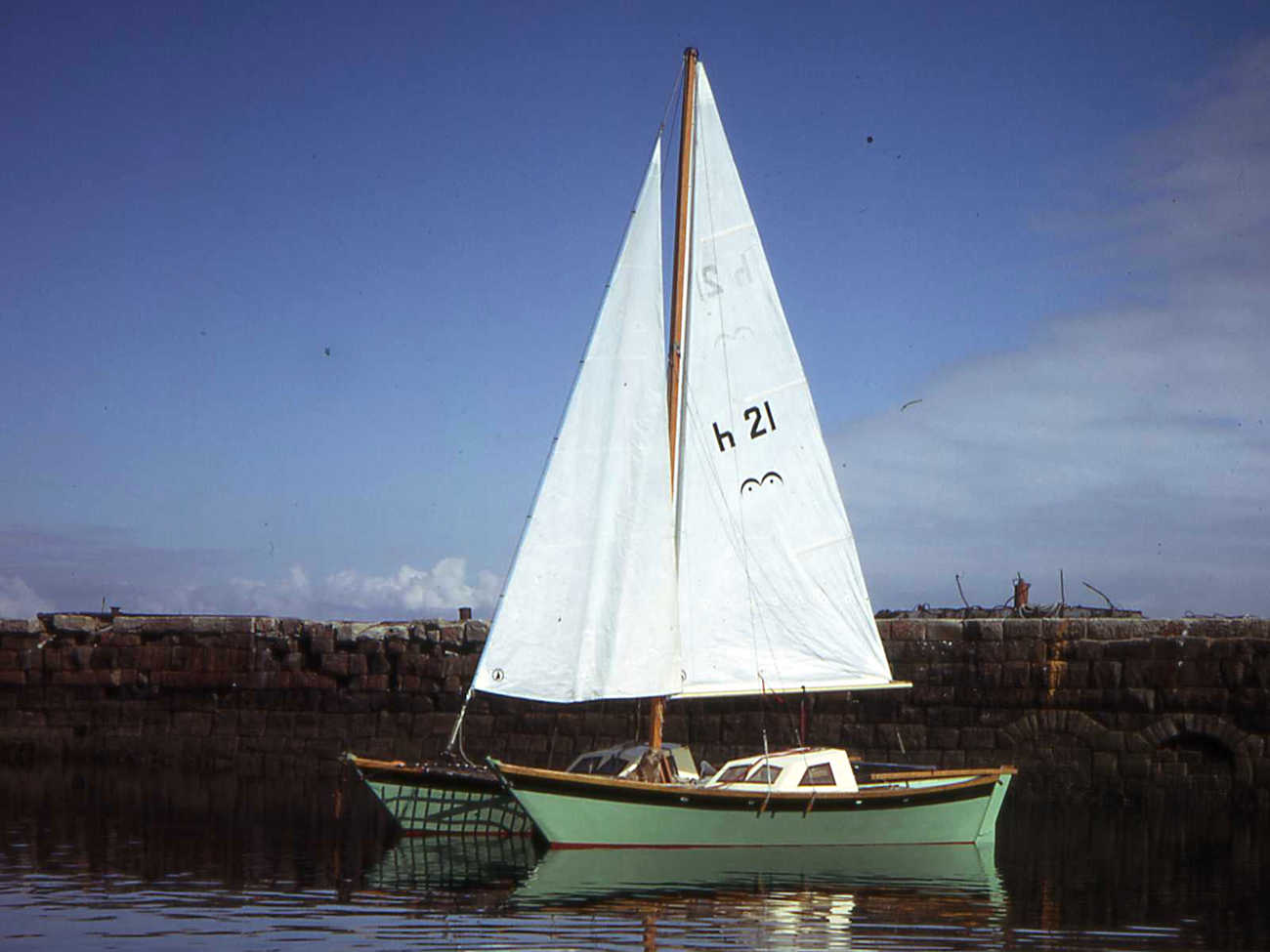
Developed out of the 22ft (6.70m) HINA, designed as a tough dayboat with overnight accommodation in the individual hulls. A decktent will give further accommodation and space for a double bunk.
The sprit sail rig has a short mast and can be quickly brailed when mooring. Though designed as a dayboat, some HINEMOAs have crossed oceans, one even survived a hurricane off the coast of America in 1975.
Tanenui
| Building Method: | GRP Foam Sandwich OR Ply/Timber/Epoxy/Laminate | |
|---|---|---|
| Length Overall: | 28′ 3″ | 8.61 m |
| Beam overall: | 12′ 6″ | 3.18 m |
| Waterline length: | 23′ 7″ | 7.18 m |
| Draft: | 1′ 8″ | 0.50 m |
| Weight: | 2204 lbs | 1000 kg |
| Loading capacity: | 2204 lbs | 1000 kg |
| Sail area: | 310 sqft | 28.8 sqm |
| Building Time Estimate: | 1000 hours | |
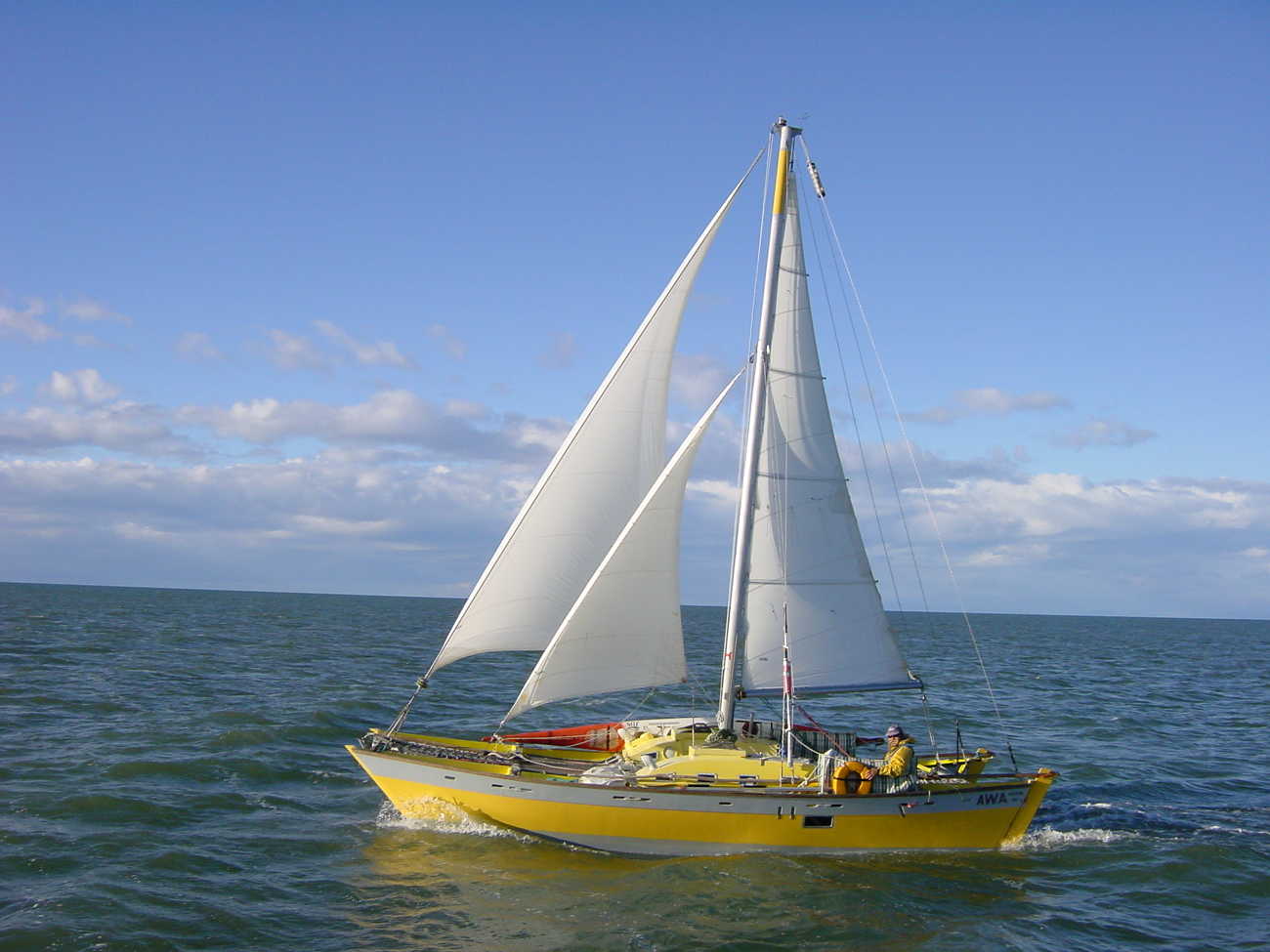
Based on the 1960s 27′ TANE design with more beam and higher freeboard, she can be built in foam/GRP sandwich or in plywood.
The Classic hull seaworthiness of the TANE encouraged many people to make ocean passages on her. We designed the TANENUI in 1973 to give these people on a low budget a sturdy, seaworthy basic boat with just that bit more internal space than the Spartan TANE.
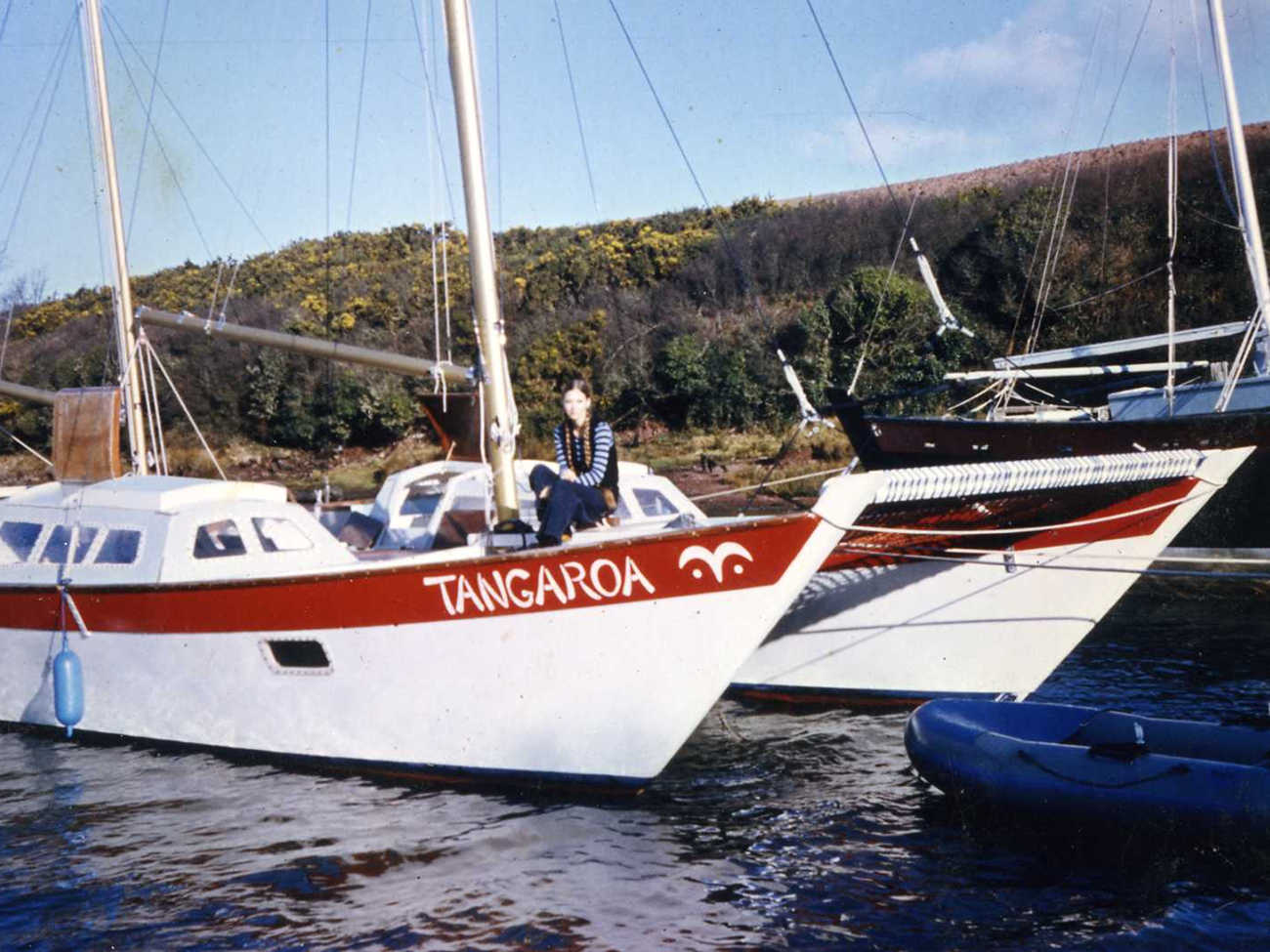
Tangaroa Mk IV
| Building Method: | Ply/Timber/Epoxy/Laminate | |
|---|---|---|
| Length Overall: | 35′ 6″ | 10.82 m |
| Beam overall: | 19′ | 5.80 m |
| Waterline length: | 28′ 6″ | 8.69 m |
| Draft: | 2′ 1″ | 0.63 m |
| Weight: | 2 tons | |
| Loading capacity: | 1.5 tons | |
| Sail area: | 410 sqft | 38.1 sqm |
| Building Time Estimate: | 1800 hours | |
The Tangaroa Mk IV was a design that evolved from the Tangaroa Mk I, James’ first design for which he drew Self-building Plans in 1965.
The Mk IV has more graceful hull lines, wider hull beam, more freeboard over the bunks and a longer cabin with standing headroom, so it is not to be mistaken for the Tangaroa Mk I of which many are still sailing.
Raka
| Building Method: | Ply/Timber/Epoxy/Laminate | |
|---|---|---|
| Length Overall: | 36′ | 10.97 m |
| Beam overall: | 19′ | 5.80 m |
| Waterline length: | 30′ | 9.14 m |
| Draft: | 2′ | 0.61 m |
| Weight: | 1.7 tons | |
| Loading capacity: | 1 – 1.5 tons | |
| Working sail area: | 415 sqft | 38.6 sqm |
| Max. sail area: | 627 sqft | 58.3 sqm |
| Building Time Estimate: | 1600 hours | |
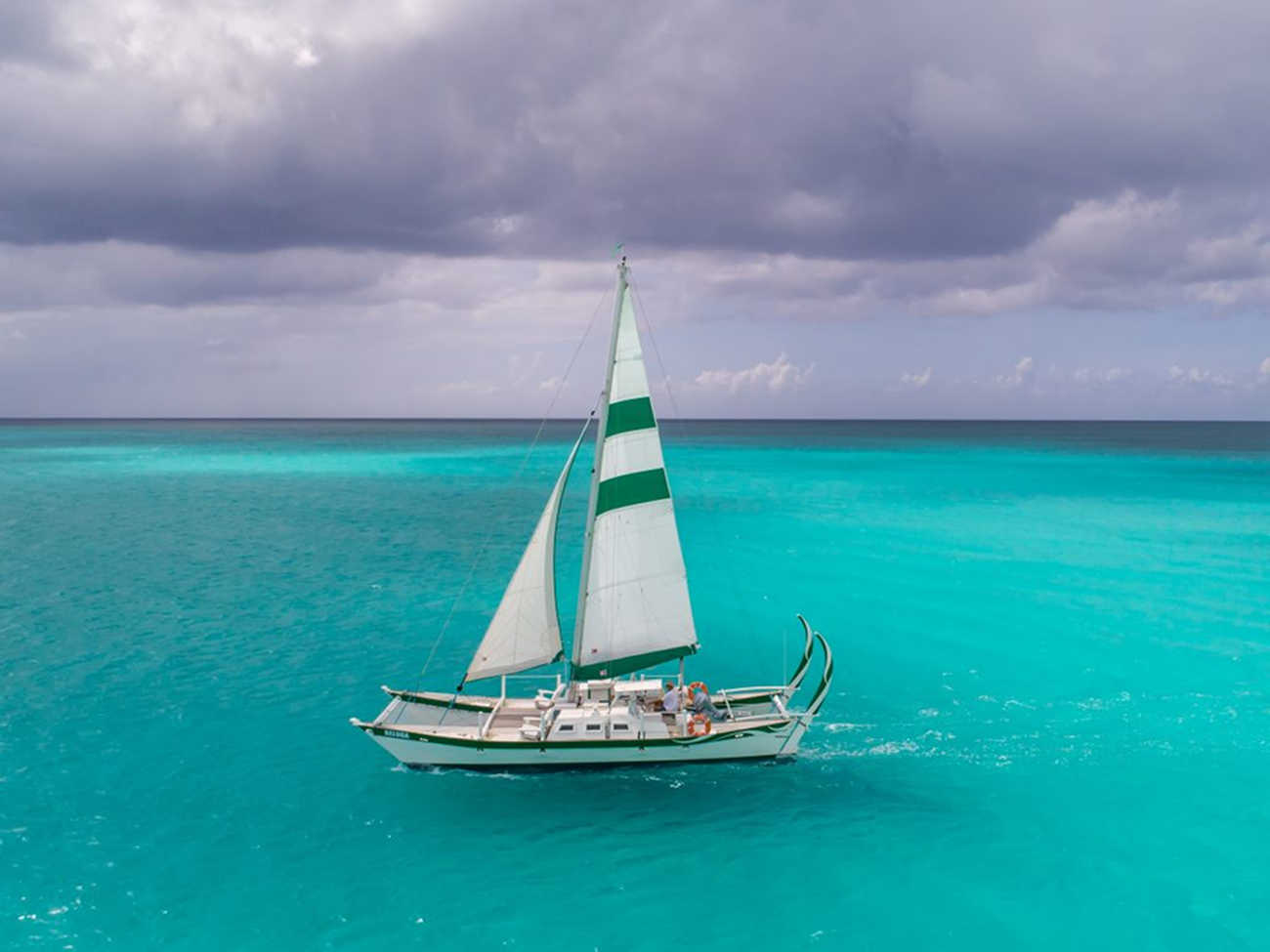
The RAKA class, the same length as the TANGAROA, is a slim-line ship. Originally designed for George Payne who wanted a boat that he could enter in local club races in the Bristol Channel and stand a chance of winning.
He won several.
Narai Mk I/Mk II
| Building Method: | Ply/Timber/Epoxy/Laminate | |
|---|---|---|
| Length Overall: | 40′ | 12.19 m |
| Beam overall: | 18′ 6″ | 5.64 m |
| Waterline length: | 32′ | 9.75 m |
| Draft: | 2′ 3″ | 0.69 m |
| Weight: | 3 tons | |
| Loading capacity: | 3 tons | |
| Sail area: | 600 sqft | 55.8 sqm |
| Building Time Estimate: | 2000 – 2500 hours | |
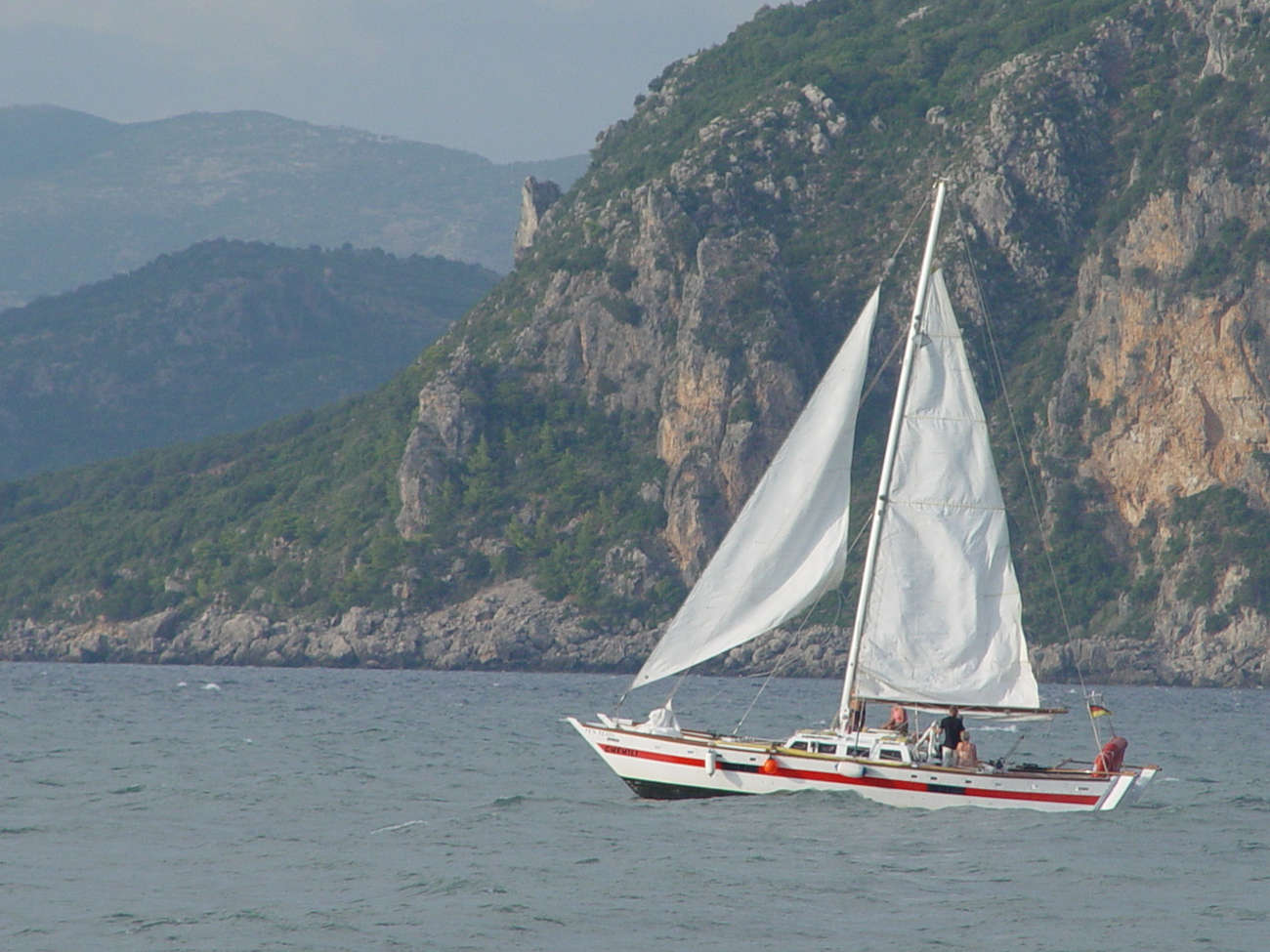
The NARAI design is a direct descendant of the 40ft RONGO on which James made his pioneering voyage across the North Atlantic in 1959.
NARAIs have been rigged as junks, Polynesian sprits, Bermudan ketch, Bermudan cutter or gaff schooners – powered by deck mounted diesels or outboard engines, the NARAIs attract the pioneering type. Now also available with the Wharram Wingsail rig (extra package).
The Mk I is the basic design. The Mk II has an extended centre cabin, giving more accommodation space. Drawings for both included.
Narai Mk IV
| Building Method: | Ply/Timber/Epoxy/Laminate | |
|---|---|---|
| Length Overall: | 41′ | 12.50 m |
| Beam overall: | 19″ | 5.80 m |
| Waterline length: | 32′ | 9.75 m |
| Draft: | 2′ 4″ | 0.71 m |
| Weight: | 3.5 tons | |
| Loading capacity: | 3 – 3.5 tons | |
| Working sail area: | 529 sqft | 49.1 sqm |
| Max. sail area: | 840 sqft | 78.1 sqm |
| Building Time Estimate: | 2500 – 3000 hours | |
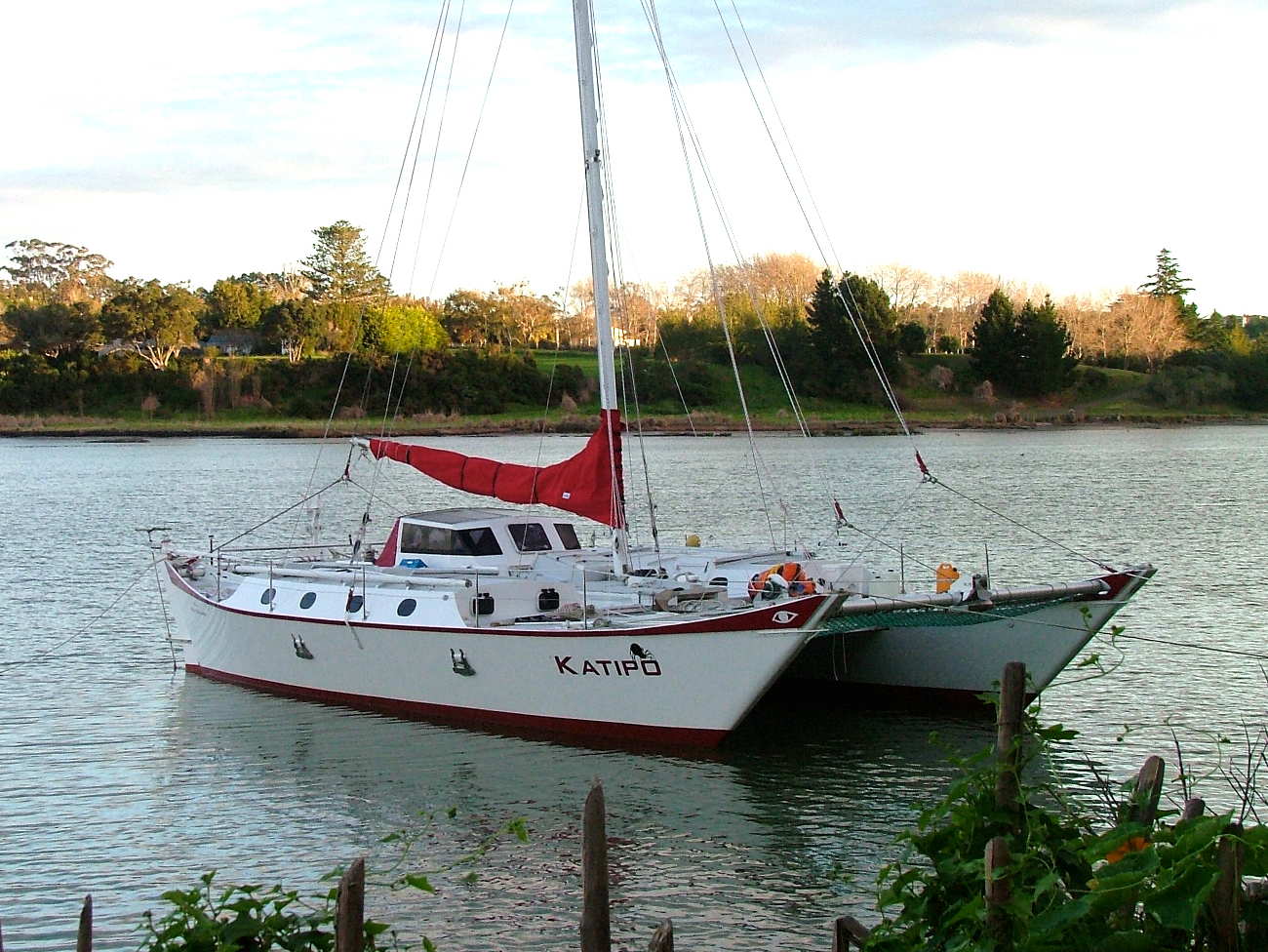
After considerable experience with the Narai Mk I and II we brought out a new design to get more volume on the same length. The Narai Mk IV has wider individual hulls and increased headroom by raising the decks to the level of the gunnels and placing the cross beams in beam troughs. This is a very sturdy ocean cruiser with many ocean crossings and circumnavigations to its name.
Ariki
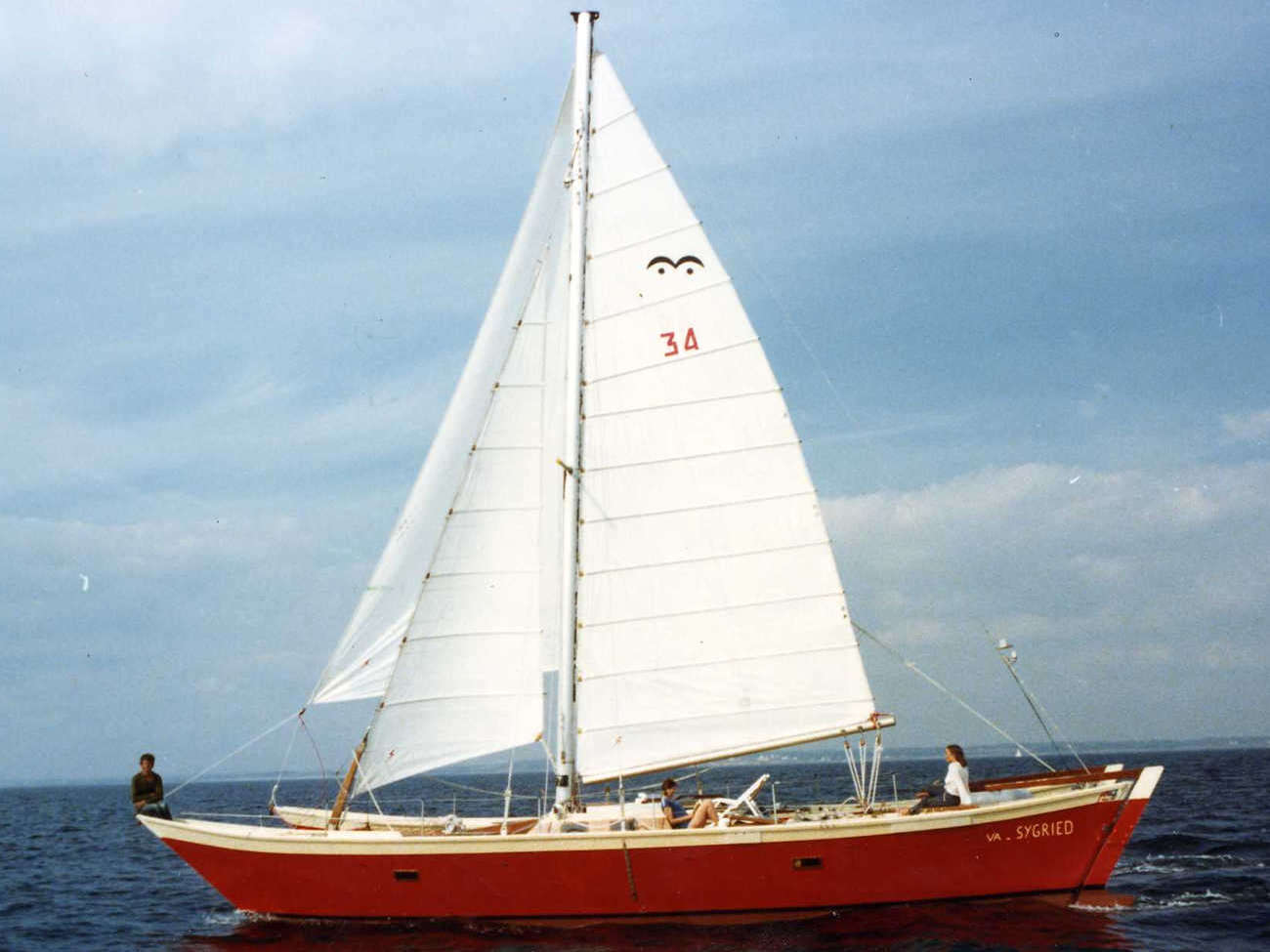
| Building Method: | Ply/Timber/Epoxy/Laminate | |
|---|---|---|
| Length Overall: | 45′ 6″ | 13.88 m |
| Beam overall: | 20′ | 6.10 m |
| Waterline length: | 38′ | 11.58 m |
| Draft: | 2′ 5″ | 0.74 m |
| Weight: | 3.2 tons | |
| Loading capacity: | 2 tons | |
| Working sail area: | 712 sqft | 66.2 sqm |
| Max. sail area: | 977 sqft | 90.8 sqm |
| Building Time Estimate: | 3000 hours | |
A smaller version of the TEHINI and a bigger version of the RAKA. Designed for an Australian who wished to enter the ‘Single-handed Trans Atlantic Race’ in the early 1970s.
A very rakish looking design with simple to construct, fast, slim hulls. However, if you are looking for more accommodation check out the newer Tiki 46.
Tehini
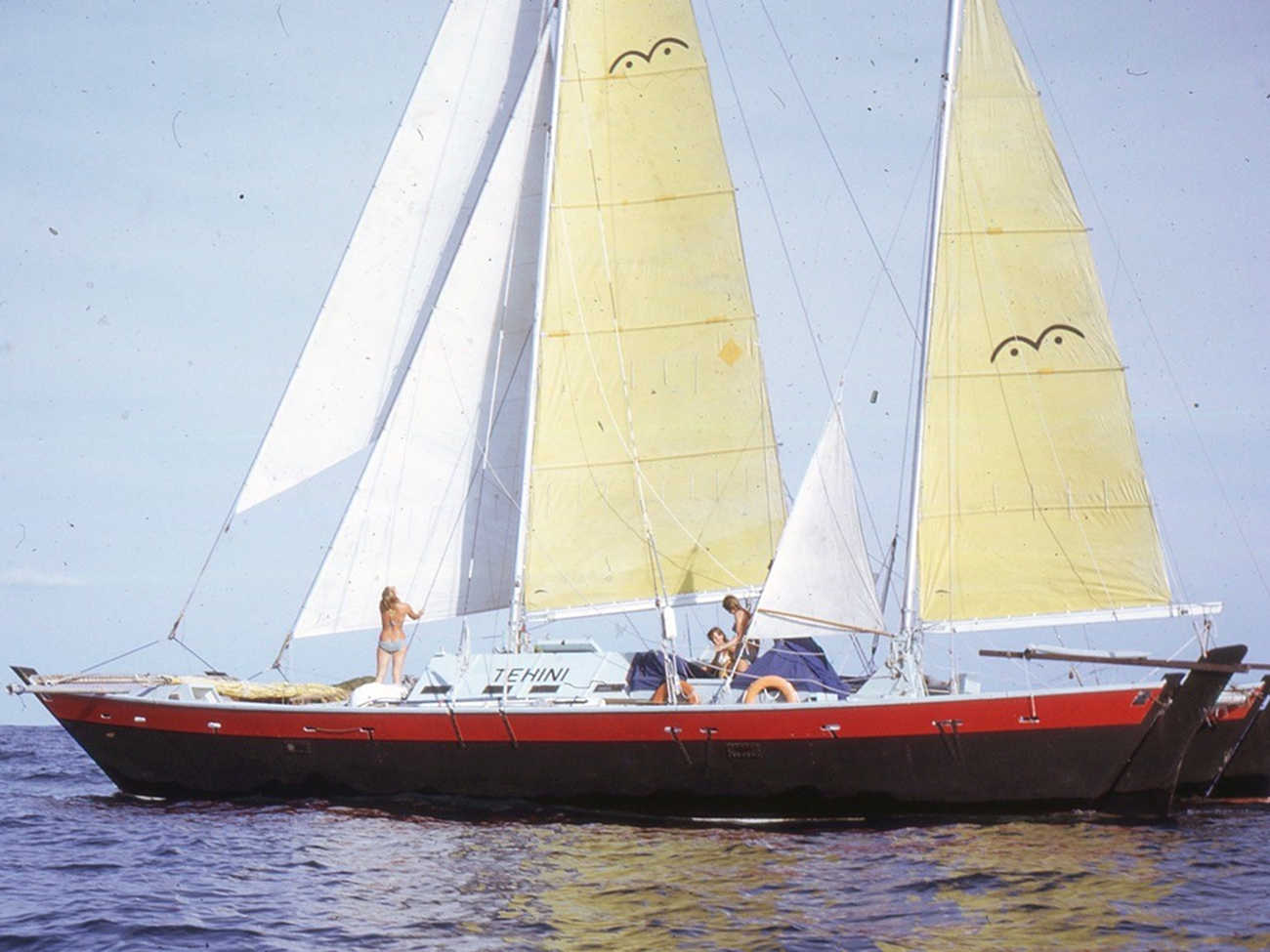
| Building Method: | Ply/Timber/Epoxy/Laminate | |
|---|---|---|
| Length Overall: | 51′ | 15.55 m |
| Beam overall: | 24′ 6″ | 7.56 m |
| Waterline length: | 40′ | 12.19 m |
| Draft: | 2′ 8″ | 0.81 m |
| Weight: | 4 tons | |
| Loading capacity: | 3-4 tons | |
| Working sail area: | 820 sqft | 76.2 sqm |
| Max. sail area: | 1346 sqft | 125 sqm |
| Width of bunks: | 2′ 11″ – 2′ 6″ tapered | 0.9 m – 0.75 m tapered |
| Building Time Estimate: | 3500 hours | |
The TEHINI is breathtakingly beautiful. She has a timeless look about her and dominates any harbour with her rakish, piratical looking lines. James built this boat as his own and spent 10 years living on her with five others.
The Tehini Building Plans include design modifications for Tehini Mk II. These comprise improved accommodation space with raised decks, increased overall beam, added centreboards (optional), increased sail area and various other additional details.